
















A “titre de voyage” (literally “travel document” in French) is a type of travel document issued to individuals who are not able to obtain a passport from their country of origin. Here are the key points about a titre de voyage:
- Issued to Refugees and Stateless Persons: This document is commonly issued to refugees, stateless persons, and other individuals who, for various reasons, cannot obtain a national passport from their home country. It is often granted by countries that have signed international agreements such as the 1951 Refugee Convention.
- Purpose: The titre de voyage allows the holder to travel internationally. It serves as a substitute for a national passport and provides identification and proof of the holder’s status as recognized by the issuing country.
- Validity: The validity of a titre de voyage can vary depending on the issuing country, but it generally ranges from one to three years. The holder must renew it upon expiration if they continue to need it.
- Contents: Similar to a regular passport, a titre de voyage includes the holder’s personal information, photograph, and necessary details to identify them. It also has pages for visas and entry/exit stamps.
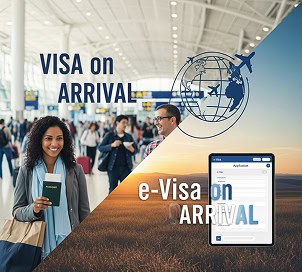
- Travel Rights: The travel rights conferred by a titre de voyage can vary. Some countries may grant visa-free or visa-on-arrival access to holders of such documents, but this depends on bilateral agreements and individual country policies.
- Issuance by Host Countries: The titre de voyage is issued by the authorities of the country where the individual has been granted asylum or recognized as a stateless person. It signifies that the host country has given protection to the holder.
- Restrictions: While a titre de voyage facilitates international travel, it may come with certain restrictions. For instance, the holder may not be allowed to travel to their country of origin or other specified countries.
In summary, a titre de voyage is a travel document issued to individuals who cannot obtain a passport from their home country, typically refugees and stateless persons. It serves as a substitute for a national passport and allows for international travel, subject to the policies of the issuing and receiving countries.
 English
  Bahasa Indonesia
  Español
  Italiano
  Français
  日本語
日本語  Nederlands
  繁體中文
繁體中文  한국어
한국어  Norsk bokmål
  Svenska
  Dansk
Dansk  Türkçe
  Polski
  香港中文
香港中文  简体中文
简体中文  Українська
  Русский
  Bahasa Melayu