











Indonesisch D1-visum: kosten, vereisten en regels voor 2026

Het D1-visum van Indonesië is een visum voor meerdere binnenkomsten voor reizigers die van plan zijn meerdere keren terug te keren voor toerisme, familiebezoek, doorreis of goedgekeurde evenementen. Het visum is verkrijgbaar met een geldigheidsduur van één jaar, twee jaar of vijf jaar en geeft u bij elke binnenkomst in Indonesië recht op een eerste verblijf van maximaal 60 dagen.
Het belangrijkste punt is dat de geldigheidsduur van het visum en de verblijfsduur niet hetzelfde zijn. Met een D1-visum van één jaar kun je het visum gedurende dat jaar gebruiken voor herhaalde binnenkomsten, maar je mag niet één aaneengesloten jaar in Indonesië verblijven. Bij elke binnenkomst begint een nieuwe verblijfsperiode, en volgens de huidige regels kan één bezoek worden verlengd tot maximaal 180 dagen.
In deze gids leggen we je uit voor wie het D1-visum het meest geschikt is, wat de kosten zijn, welke documenten je nodig hebt, hoe sponsoring en verlengingen in hun werk gaan, wat je wel en niet mag doen, en wanneer een ander visum wellicht beter bij je plannen past.
Het Indonesische D1-visum in een oogopslag
- Type vermelding: Meerdere vermeldingen.
- Hoofddoel: Toerisme, bezoeken aan familie of vrienden, doorreis en deelname aan goedgekeurde bijeenkomsten, congressen, incentive-evenementen of tentoonstellingen
- Geldigheid visum: Een jaar, twee jaar of vijf jaar.
- Eerste verblijf na elke aankomst: Maximaal 60 dagen.
- Maximale verblijfsduur inclusief verlengingen: Volgens de huidige officiële regels maximaal 180 dagen per bezoek
- Officiële overheidsheffing: 4.000.000 IDR voor één jaar, 6.000.000 IDR voor twee jaar of 11.000.000 IDR voor vijf jaar
- Sponsor voor de eerste aanvraag: Meestal niet vereist voor houders van een gewoon paspoort, maar er kunnen uitzonderingen gelden op basis van nationaliteit
- Sponsor voor een uitbreiding: Volgens de officiële procedure dient een sponsor het online verzoek tot verlenging in via een geregistreerd account
- Arbeidsrechten: De D1-vergunning geeft je geen toestemming om te werken of loon te ontvangen van een Indonesische persoon of onderneming
- Omzetting naar ITAS of KITAS: Volgens de huidige officiële D1-classificatie kan het niet worden omgebouwd
- Officiële verwerkingstermijn: Vijf werkdagen na ontvangst van de betaling, mits de aanvraag volledig is
Laatst gecontroleerd: 29 juni 2026. Regels en tarieven kunnen veranderen. Raadpleeg de meest recente officiële richtlijnen voordat u een aanvraag indient. Deze gids bevat algemene informatie en vormt geen juridisch advies.
Inhoudsopgave
Wat is het Indonesische D1-visum?
Het Indonesische D1-visum is een visum voor meerdere binnenkomsten, bedoeld voor toerisme en andere toegestane activiteiten voor bezoekers. Simpel gezegd kun je met één visum meerdere reizen maken, zodat je niet elke keer dat je het land verlaat en weer terugkeert een nieuw visum hoeft aan te vragen.
Het kan dus een praktische keuze zijn als je regelmatig naar Indonesië reist, of dat nu is om familie te bezoeken, er herhaaldelijk op vakantie te gaan, als deelnemer aan goedgekeurde bijeenkomsten of beurzen deel te nemen, of zelfs om Indonesië op te nemen in een langer regionaal reisplan. Je kunt kiezen voor een geldigheidsduur van één, twee of vijf jaar; bij elke binnenkomst begint echter telkens een nieuwe verblijfsperiode.
Hoewel het D1-visum meerdere binnenkomsten toestaat, blijft het een bezoekersvisum. Dit betekent dat het je geen recht geeft om te werken, een bedrijf runnen, of als ingezetene in Indonesië wonen. Als uw voornaamste doel werk, telewerken, investeren, gezinsverblijf of pensioen is, is een ander visum of een andere verblijfsvergunning wellicht beter afgestemd op uw plannen.
Hoe lang mag je blijven met een D1-visum?

Je verblijf op basis van een D1-visum wordt apart geteld, los van de totale geldigheidsduur van het visum. Hieronder wordt uitgelegd hoe het eerste verblijf, verlengingen, vertrek en terugkeer in hun werk gaan.
Je eerste verblijf duurt maximaal 60 dagen
Telkens wanneer u Indonesië binnenkomt met een geldig D1-visum, krijgt u een eerste verblijfsduur van maximaal 60 dagen.
Reken de duur van je verblijf vanaf de datum waarop de immigratiedienst je toelaat tot het land. Reken niet vanaf de dag waarop je het visum hebt gekocht of vanaf de dag waarop het is goedgekeurd.
Controleer na elke aankomst de gegevens van de verblijfsvergunning. Een typefout, een verkeerde datum of een gemiste deadline is makkelijker te corrigeren als je het vroeg opmerkt.
U kunt één bezoek verlengen tot maximaal 180 dagen
Volgens de huidige immigratievoorschriften kan een D1-verblijf per bezoek worden verlengd tot maximaal 180 dagen in totaal.
Dit gebeurt niet vanzelf. Je moet een aanvraag indienen voordat je huidige verblijfsvergunning afloopt, de vereiste stappen volgen en goedkeuring krijgen. De verlenging wordt online aangevraagd door een sponsor. De immigratiedienst kan je vragen om aanvullende stappen te ondernemen, dus volg de instructies die bij je aanvraag worden gegeven.
Beschouw de online betaling niet als bewijs dat de procedure is afgerond. Volg alle instructies op totdat uw vernieuwde verblijfsvergunning is afgegeven.
Wat gebeurt er als je Indonesië verlaat?
Als je Indonesië verlaat, eindigt de verblijfsperiode die aan die binnenkomst is gekoppeld. Stel bijvoorbeeld dat je op 1 februari het land binnenkomt en op 20 februari weer vertrekt. De ongebruikte dagen van dat bezoek worden niet apart bijgehouden. Dat verblijf wordt afgesloten op het moment dat je vertrekt. Uw D1-visum zelf kan geldig blijven. U kunt het opnieuw gebruiken voor een volgende binnenkomst vóór de vervaldatum van het visum.
Geldigheidsduur van het D1-visum versus verblijfsduur
Dit is het belangrijkste punt uit de hele handleiding.
De geldigheidsduur van een visum is de periode waarin je het visum kunt gebruiken om Indonesië binnen te komen. Voor een D1-visum gaat die geldigheidsduur in op de datum waarop het visum is afgegeven.
De verblijfsduur is de periode waarin u na een bepaalde binnenkomst in Indonesië mag verblijven.
Een D1-visum voor één jaar
Met een D1-visum voor één jaar kun je tijdens de geldigheidsduur van één jaar meerdere keren het land binnenkomen. Het geeft je echter geen recht op een ononderbroken verblijf van één jaar in Indonesië.
Deze optie kan een goede keuze zijn als u verwacht dat u binnen de komende 12 maanden twee of meer reizen zult maken, maar u zich niet voor een langere periode wilt vastleggen.
Een D1-visum voor twee jaar
Met een visum voor twee jaar heb je een langere periode waarin je het land kunt binnenkomen. Dit kan handig zijn als Indonesië deel uitmaakt van je vaste reispatroon, bijvoorbeeld bij herhaalde familiebezoeken of seizoensgebonden verblijven.
Na elke aankomst krijg je nog steeds een afzonderlijke verblijfsperiode toegewezen. Het label voor twee jaar vervangt de regel van het eerste verblijf van 60 dagen niet.
Een D1-visum voor vijf jaar
De vijfjarige D1-vergunning heeft de langste geldigheidsduur en de hoogste leges.
Dit kan een uitkomst zijn voor regelmatige bezoekers die niet elk jaar een nieuw visum willen aanvragen.
Een geldigheidsduur van vijf jaar betekent niet dat u vijf jaar ononderbroken in het land moet hebben verbleven. U moet elke binnenkomst, elke verblijfsvergunning en elke verlenging bijhouden.
Een handige manier om je een beeld te vormen van het proces:
- Visum afgegeven
- Indonesië invoeren
- Ontvang tot 60 dagen
- Verlengen of opzeggen
- Opnieuw binnenkomen terwijl het visum nog geldig is
- Een nieuwe verblijfsperiode ontvangen
Wat kun je doen met een D1-visum?
In de D1-zone zijn goedgekeurde bezoekersactiviteiten toegestaan. Hieronder vallen onder meer:
- •Reizen voor toeristische doeleinden.
- •Op bezoek gaan bij vrienden of familie.
- •Deelnemen aan vergaderingen als toehoorder.
- •Deelnemen aan incentive-reizen.
- •Het bijwonen van congressen of beurzen als deelnemer.
- •Op doorreis door Indonesië.
- Je daadwerkelijke bezigheid moet overeenkomen met de reden die je in je aanvraag hebt opgegeven.
Zo is het bijvoorbeeld iets anders om als bezoeker een openbare beurs bij te wonen dan om op een stand te werken, een dienst te verkopen of door een Indonesisch bedrijf te worden betaald. Wanneer een activiteit steeds meer op werk, promotie, verkoop of productie begint te lijken, heb je mogelijk een ander visum nodig.
Wat mag je niet doen met een D1-visum?
Met een D1-visum mag je niet:
- •Een betaalde baan aannemen in Indonesië.
- •Goederen of diensten verkopen in Indonesië.
- •Loon of een soortgelijke vergoeding ontvangen van een Indonesische persoon of onderneming.
- •Activiteiten uitvoeren die buiten het goedgekeurde doel van het bezoek vallen.
- •Langer blijven dan de datum die op je huidige verblijfsvergunning staat vermeld.
Wees voorzichtig met promotieprojecten. Ga er niet zomaar vanuit dat een activiteit is toegestaan, alleen omdat je er niet voor wordt betaald. Voor samenwerkingen met merken, content van influencers en andere commerciële activiteiten kan een ander visum vereist zijn, afhankelijk van wat je doet en wie er voordeel bij heeft.
De D1 is een toeristenvisum, geen visum voor telewerkers. Als je van plan bent om tijdens je verblijf in Indonesië online te werken, vraag dan advies op basis van je werkgever, inkomstenbron, werkzaamheden en de beoogde verblijfsduur.
Voor wie is het D1-visum geschikt?

De D1 is het meest geschikt voor mensen die van plan zijn meerdere keren naar Indonesië te reizen. Aan de hand van de onderstaande voorbeelden kunt u bepalen of deze paspoortsoort bij uw reisplannen past.
De D1 is vaak handig voor mensen die er vaak komen
Dit visum is wellicht geschikt voor u als u van plan bent om tijdens de geldigheidsduur van het visum meerdere keren Indonesië binnen te reizen.
Stel je voor dat je partner in Indonesië woont, maar dat je zelf nog steeds in het buitenland werkt en daar een woning hebt. Je gaat er een paar weken op bezoek, vertrekt dan weer voor je werk en keert daarna terug. Met een visum voor meerdere binnenkomsten hoef je niet voor elke reis een nieuwe aanvraag in te dienen.
Het kan handig zijn als je even weg moet en weer terugkomt
Reisplannen verlopen niet altijd vlekkeloos.
Misschien wil je vier maanden in Indonesië doorbrengen, maar moet je halverwege je reis een bruiloft in Singapore bijwonen. Met een visum voor één binnenkomst kan het verlaten van het land het einde van dat visum betekenen. Met een geldig D1-visum kun je het land verlaten en later met hetzelfde visum opnieuw om toegang vragen.
Dit kan geschikt zijn voor mensen die hun tijd over verschillende landen verdelen
Sommige reizigers brengen een deel van het jaar door bij familie in Indonesië en de rest in hun eigen land. Anderen keren elk jaar in hetzelfde seizoen terug.
Bij dit patroon kan D1 eenvoudiger zijn dan herhaalde eenmalige aanvragen. Het voordeel zit hem in hergebruik, niet in een langer ononderbroken verblijf.
Wanneer D1 nuttiger kan zijn dan herhaalde C1-aanvragen
Een C1-visum is een visum voor een eenmalig bezoek. Dit visum kan een betere keuze zijn voor een geplande reis, vooral als u niet van plan bent om het land te verlaten en weer terug te keren.
Een D1-visum kan handiger zijn als je vooral regelmatig het land wilt binnenkomen. Je betaalt in het begin wel meer, maar dat kan je later bij toekomstige aanvragen tijd besparen.
Vergelijk niet alleen de prijs. Vergelijk je volledige reisplan, inclusief hoe vaak je het land binnenkomt, hoe lang elk verblijf kan duren en of je later misschien een verblijfsvergunning nodig hebt.
Visumvereisten voor Indonesië (D1)
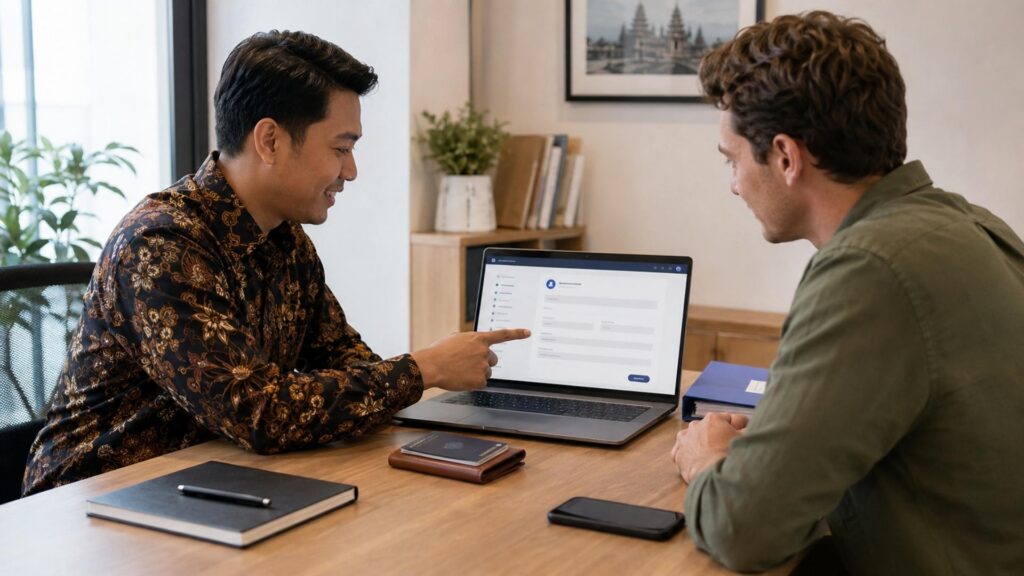
Zorg voor duidelijke, goed leesbare bestanden. Een volledige aanvraag is gemakkelijker te beoordelen en loopt minder kans op vertraging.
Paspoort
Uw paspoort moet nog minimaal zes maanden geldig zijn. Speciale reisdocumenten of regels inzake nationaliteit kunnen tot aanvullende voorwaarden leiden.
Zorg ervoor dat de identiteitspagina duidelijk en volledig is. Je naam, paspoortnummer, nationaliteit en geboortedatum moeten exact overeenkomen met de aanvraag.
Bankafschriften van de afgelopen drie maanden
Je hebt bankafschriften van de afgelopen drie maanden nodig. Volgens de officiële vereisten moet je aantonen dat je over ten minste 2.000 USD of een gelijkwaardig bedrag in een andere valuta beschikt.
Gebruik afschriften waarop je naam, rekeninggegevens, datums en saldo staan vermeld. Vermijd bijgesneden schermafbeeldingen waarop informatie ontbreekt, tenzij het aanvraagsysteem deze duidelijk accepteert.
Recente foto
Dien een recente foto in die voldoet aan de regels voor afmetingen en achtergrond zoals aangegeven in het aanmeldingsportaal. Gebruik een scherpe afbeelding zonder filters, schaduwen of ingrijpende bewerkingen.
CV
Je cv geeft de immigratiedienst een algemeen beeld van je werkervaring en persoonlijke achtergrond. Zorg ervoor dat het actueel, eenvoudig en eerlijk is.
Reisplan
In je reisplan moet de geplande reis duidelijk worden beschreven. Vermeld de verwachte data, plaatsen en het algemene doel van het bezoek.
Je hoeft er geen minutieus tijdschema van te maken. Het moet gedetailleerd genoeg zijn om aan te tonen dat de reis in overeenstemming is met het D1-doel.
Begeleidende brief, uitnodiging of bewijs van familieband
Voor sommige aanvragen kan aanvullend bewijsmateriaal nodig zijn, zoals:
- •Een brief over het bezoek.
- •Een uitnodiging of andere briefwisseling.
- •Bewijs van een familieband.
- •Documenten die verband houden met een bijeenkomst, congres of beurs.
Wat je nodig hebt, hangt af van het doel van je reis.
Aanvullende regels voor bepaalde nationaliteiten
Voor houders van bepaalde paspoorten kunnen extra controles, vereisten inzake een sponsor of een speciale goedkeuring gelden. Ga er niet zomaar vanuit dat de algemene regel dat er geen sponsor nodig is, voor elke nationaliteit geldt.
Controleer of je aan de voorwaarden voldoet voordat je betaalt. Een regel die voor je vriend gold, hoeft niet per se ook voor jouw paspoort te gelden.
Heb je een sponsor nodig voor een D1-visum?
Bij de eerste aanvraag hebben de meeste houders van een gewoon paspoort volgens de algemene D1-regel geen garant nodig.
Er kunnen echter uitzonderingen gelden. Afhankelijk van je nationaliteit, het type paspoort of de geplande activiteit kunnen de vereisten verschillen.
De verlengingsprocedure verloopt anders. Volgens de huidige officiële informatie is de D1-uitbreiding De aanvraag wordt online ingediend door een sponsor via een geregistreerd account. Dit betekent dat een reiziger die aanvankelijk zelfstandig een aanvraag heeft ingediend, later mogelijk toch hulp van een sponsor nodig heeft.
Dat verschil verklaart waarom advies op internet vaak tegenstrijdig klinkt. De ene persoon heeft het over de eerste visumaanvraag, de andere over een verlenging ter plaatse.
Hoeveel kost het Indonesische D1-visum?
De kosten van een Indonesisch D1-visum hangen voornamelijk af van de geldigheidsduur die u wenst. Als u de aanvraag rechtstreeks via het officiële immigratiesysteem indient, bedragen de overheidsheffingen:
- D1-visum voor één jaar: 4.000.000 IDR
- Tweejarig D1-visum: 6.000.000 IDR
- D1-visum voor vijf jaar: 11.000.000 IDR
Deze kosten hebben echter uitsluitend betrekking op de visumaanvraag bij de overheid en het verificatieproces. Ze omvatten geen hulp bij het kiezen van de meest geschikte geldigheidsduur, het controleren van uw documenten, het opstellen van de aanvraag, het corrigeren van vermijdbare fouten of het reageren op aanvullende verzoeken van de immigratiedienst.
Om die reden geven sommige aanvragers er de voorkeur aan om professionele hulp in te schakelen in plaats van elke fase zelfstandig af te handelen.
Krijg deskundige hulp bij uw D1-visumaanvraag
Een overzichtelijker aanmeldingsproces, minder vermijdbare problemen en professionele ondersteuning wanneer je die nodig hebt.
Wanneer u zich via Visa-Indonesia.com aanmeldt, dekt onze servicekosten de professionele ondersteuning bij uw aanvraag.
Voordat uw aanvraag wordt ingediend, controleert ons team uw documenten en aanvraaggegevens op ontbrekende, tegenstrijdige of mogelijk problematische informatie. Daarnaast gaan we na of de gekozen visumoptie geschikt is voor uw geplande reisplannen.
Het resultaat is dat je een overzichtelijker proces krijgt en iemand hebt aan wie je je kunt wenden wanneer je hulp nodig hebt. In plaats van elke stap in je eentje te moeten regelen, word je tijdens het hele aanvraagproces begeleid.
- Een overzicht van de visummogelijkheden die voor u openstaan
- Controle van documenten en aanvragen vóór indiening
- Begeleiding bij het indienen en betalen
- Live updates over de status van de aanvraag
- 24/7 meertalige klantenservice
- Hulp bij aanvullende immigratieaanvragen
- Sponsoring en ondersteuning bij uitbreiding, indien nodig
- Herinneringen voordat je verblijfsvergunning afloopt
Duidelijke prijsopgave vóór betaling: Onze servicekosten staan los van de overheidsheffing. Voordat u een definitieve beslissing neemt, krijgt u inzicht in de totale prijs, de inbegrepen ondersteuning en eventuele relevante voorwaarden.
Zo kunt u de verschillende mogelijkheden duidelijk met elkaar vergelijken en het ondersteuningsniveau kiezen dat het beste bij uw reisplannen past.
Hoe vraag je het Indonesische D1-visum aan?
De aanvraag wordt online ingevuld, maar een zorgvuldige voorbereiding blijft belangrijk. Volg deze stappen om fouten te beperken en onnodige vertragingen te voorkomen.
Stap 1: Maak een eVisa-account aan
Maak gebruik van het officiële Indonesische eVisa-systeem of een betrouwbare dienstverlener. Pas op voor valse websites die de huisstijl van de overheid kopiëren en veel meer vragen dan de werkelijke kosten.
Stap 2: Kies de D1-classificatie
Lees eerst het doel en de beperkingen door voordat u verdergaat. Een visum voor meervoudige binnenkomst is niet geldig voor werk, zakelijke activiteiten of langdurig verblijf.
Stap 3: Upload de vereiste documenten
Upload duidelijke bestanden en controleer elk veld. Kleine foutjes in een paspoortnummer of naam kunnen later voor grote problemen zorgen.
Stap 4: Betaal de aanmeldingskosten
Volg de betalingsinstructies in het portaal. Bewaar het betalingsbewijs en het aanvraagnummer.
Stap 5: Wacht op de verificatie
De officiële verwerkingstermijn bedraagt vijf werkdagen na ontvangst van de betaling. Dit is een officiële streeftermijn, geen garantie dat elke aanvraag binnen vijf dagen wordt afgehandeld.
Onvolledige dossiers, feestdagen, extra nationaliteitscontroles of systeemproblemen kunnen het proces vertragen.
Stap 6: Controleer de goedgekeurde eVisa
Lees de visumvoorwaarden voordat je op reis gaat. Controleer het volgende:
- • Je volledige naam.
- • Paspoortnummer.
- • Geboortedatum.
- • Nationaliteit.
- • Soort visum.
- • Geldigheidsdata.
Meld een fout zo snel mogelijk. Wacht niet tot je bij de luchtvaartmaatschappij incheckt.
Stap 7: Neem een afgedrukte en een digitale kopie mee
Bewaar de eVisa op je telefoon en neem een afgedrukt exemplaar mee. Zorg er ook voor dat je je retour- of doorreisticket, accommodatiegegevens en een bewijs van voldoende financiële middelen bij de hand hebt, voor het geval een ambtenaar hierom vraagt.
Hoe lang duurt de D1-verwerking?
Op de officiële D1-pagina staat vermeld dat dit vijf werkdagen na ontvangst van de betaling duurt.
Een werkdag is niet hetzelfde als een kalenderdag. Weekenden en Indonesische feestdagen kunnen de daadwerkelijke wachttijd verlengen.
Houd rekening met een veiligheidsmarge. Plan geen reis waarvoor geen restitutie mogelijk is rond de vroegst mogelijke goedkeuringsdatum.
Er is een grotere kans op vertragingen wanneer:
- • Een bestand is wazig of onvolledig.
- • De persoonlijke gegevens komen niet overeen.
- • Het bankafschrift bestrijkt niet de vereiste periode.
- • De immigratiedienst vraagt om meer bewijs.
- • Je nationaliteit moet nogmaals worden gecontroleerd.
- • Het systeem geeft aan dat er een probleem is met de betaling of de verificatie.
Is het mogelijk om een D1-verblijf in Indonesië te verlengen?
Ja. Volgens de huidige officiële informatie kan het oorspronkelijke verblijf van 60 dagen voor dat bezoek worden verlengd tot maximaal 180 dagen in totaal.
Begin op tijd. Als je wacht tot de laatste paar dagen, heb je nauwelijks nog tijd om een ontbrekend bestand, een probleem met een sponsor, een sluiting vanwege een feestdag of een afsprakeprobleem op te lossen.
Volg alle stappen die in de verlengingsprocedure worden aangegeven. Dit omvat het online indienen van de sponsorverklaring en de betaling, plus eventuele aanvullende stappen die de immigratiedienst van u vraagt.
Als u Indonesië verlaat terwijl een verlenging nog in behandeling is, kan uw vertrek ertoe leiden dat het verblijf dat aan die binnenkomst is gekoppeld, wordt beëindigd. Het kan er ook toe leiden dat de in behandeling zijnde verlenging overbodig of ongeldig wordt. Controleer de status voordat u uw reisplannen wijzigt.
Is het mogelijk om een D1-visum om te zetten naar een KITAS?
Volgens de huidige officiële D1-classificatie kan de D1-status niet worden omgezet in een ITAS, ook wel KITAS genoemd.
Dit punt is belangrijk omdat op sommige oudere of commerciële pagina’s iets anders wordt beweerd.
Stel dat je van plan bent eerst naar Indonesië te reizen en kort daarna een KITAS aan te vragen voor werk, een huwelijkspartner, als investeerder, voor je pensioen of om een andere reden. Als je voor D1 kiest zonder na te gaan wat de volgende stap is, kan dit ertoe leiden dat je Indonesië moet verlaten en je aanvraag via een andere procedure moet indienen.
Als KITAS je uiteindelijke doel is, plan dan achteruit vanuit de verblijfsvergunning die je wilt verkrijgen. Vraag na welk inreisvisum dat proces ondersteunt voordat je een D1-aanvraag indient.
Indonesisch D1-visum versus C1-visum
De keuze wordt eenvoudiger als je je richt op je reispatroon.
Kies D1 wanneer:
- Je verwacht meerdere invoergegevens.
- Je wilt één visum dat tijdens de geldigheidsduur meerdere keren kan worden gebruikt.
- Tussen je bezoeken door ga je vaak even weg uit Indonesië.
- Je vindt het geen probleem om in het begin een hoger bedrag te betalen.
Houd rekening met C1 wanneer:
- Je hebt één invoer nodig.
- Je plant één langer bezoek zonder weg te gaan.
- Je wilt dat de overheidsheffing bij aanvang lager is.
- Meerdere vermeldingen hebben weinig nut voor je planning.
Let op: Beide zijn bezoekersvisa. Geen van beide mag worden beschouwd als een algemene werkvergunning. De regels voor omzetting en sponsoring kunnen afhangen van het specifieke visum en je doel op lange termijn, dus controleer de huidige procedure voordat je een aanvraag indient.
Veelgestelde vragen
Ben je nog steeds niet zeker over een bepaalde regel? In deze beknopte antwoorden vind je de meest gestelde vragen van reizigers over het Indonesische D1-visum.
Is het D1-visum een toeristenvisum?
Ja. Het is een visum voor meerdere binnenkomsten dat kan worden gebruikt voor toerisme en bepaalde andere toegestane activiteiten voor bezoekers.
Is D1 geldig voor meerdere binnenkomsten?
Ja. U mag Indonesië meer dan eens binnenkomen zolang het visum geldig is, mits u bij elke aankomst toestemming krijgt van de immigratiedienst.
Kan ik met een D1-visum voor één jaar een heel jaar in Indonesië verblijven?
Niet als één ononderbroken verblijf. Elk verblijf begint met een verblijfsduur van maximaal 60 dagen. Volgens de huidige regels is een verlenging tot maximaal 180 dagen per bezoek toegestaan.
Kan een D1-verblijf worden verlengd tot meer dan 60 dagen?
Ja. Volgens de huidige officiële informatie kan het verblijf per bezoek worden verlengd tot maximaal 180 dagen in totaal.
Hoe vaak mag ik Indonesië binnenkomen?
Het D1-visum is een visum voor meerdere binnenkomsten, dus het is niet beperkt tot één reis. Elke binnenkomst wordt nog steeds door de immigratiedienst gecontroleerd en het visum moet geldig blijven.
Heb ik een sponsor nodig?
De meeste houders van een gewoon paspoort die aan de voorwaarden voldoen, hebben bij hun eerste aanvraag geen garant nodig. Er kunnen uitzonderingen gelden op basis van nationaliteit. Bij de huidige verlengingsprocedure is wel een garant betrokken.
Kan ik op afstand werken op een D1?
De D1 is een toeristenvisum, geen visum voor telewerkers. Als je van plan bent om tijdens je verblijf in Indonesië online te werken, vraag dan advies op basis van je werkgever, inkomstenbron, activiteiten en de beoogde verblijfsduur.
Kan ik mijn D1-vergunning omzetten in een KITAS-vergunning?
Volgens de huidige officiële D1-classificatie is dat niet het geval. Vraag advies voordat je een aanvraag indient als een KITAS deel uitmaakt van je plannen voor de nabije toekomst.
Hoeveel geld moet er op mijn bankafschrift staan?
Volgens de officiële vereisten moet ten minste 2.000 USD of het overeenkomstige bedrag in een andere valuta worden aangetoond aan de hand van bankafschriften van de afgelopen drie maanden.
Wat gebeurt er als ik langer blijf dan toegestaan?
Als u langer blijft dan toegestaan, kan dit, afhankelijk van het geval, leiden tot een dagboete, immigratiemaatregelen, uitzetting of een toekomstig inreisverbod. Houd de vervaldatum van uw huidige verblijfsvergunning goed in de gaten en onderneem actie voordat deze verstrijkt.
Kies het visum dat het beste bij je daadwerkelijke reisplan past
De D1-visum kan een slimme keuze zijn als je vaak naar Indonesië reist en de vrijheid wilt hebben om het land te verlaten en weer terug te keren. De echte meerwaarde zit hem in de mogelijkheid tot meervoudige binnenkomst, niet in een onbeperkt verblijf.
Stel, voordat u de aanvraag indient, een overzicht op van uw verwachte reizen. Bepaal hoe vaak u verwacht het land binnen te komen, hoe lang elk bezoek naar verwachting zal duren, of u een verlenging nodig zult hebben en of werk of een toekomstige KITAS deel uitmaakt van uw plannen.
Een controle van vijf minuten nu kan voorkomen dat u later het verkeerde visum krijgt, een verlenging in allerijl moet regelen of dure aanpassingen moet doen.
Weet je niet zeker of D1 in je planning past? Vraag ons team dan om je reisplan te bekijken en te bepalen welk visum voor Indonesië het meest geschikt is, voordat je de aanvraag indient.
Klaar om je visum aan te vragen of te verlengen?
Laat je aanvraag behandelen door onze visumspecialisten.



Richtlijnen voor de nalevingskalender van PT PMA 2026
Meer lezen
Wijzigingen in de vergunning voor buitenlandse werknemers in Indonesië in 2026: OSS, SIAPkerja en de integratie van alle Indonesische systemen
Meer lezen
 English
  Bahasa Indonesia
  Español
  Italiano
  Français
  日本語
日本語  Nederlands
  繁體中文
繁體中文  한국어
한국어  Norsk bokmål
  Svenska
  Dansk
Dansk  Türkçe
  Polski
  香港中文
香港中文  简体中文
简体中文  Українська
  Русский
  Bahasa Melayu