












Come scegliere il giusto codice KBLI Indonesia

Se avete intenzione di avviare un'attività in Indonesia, c'è un piccolo dettaglio che può influire su quasi tutto: la vostra Codice KBLI.
All'inizio, il KBLI può sembrare solo un numero da compilare quando si costituisce un'azienda. Potreste pensare: “Ok, vendo prodotti, quindi basta scegliere un codice commerciale”, oppure “Fornisco servizi, quindi basta scegliere un codice di consulenza”.”
Ma in Indonesia non è così semplice.
Il codice KBLI indica al governo ciò che la vostra azienda è effettivamente autorizzata a fare. Può influenzare il vostro numero di identificazione dell'azienda, il tuo licenze commerciali, il tuo restrizioni alla proprietà straniera, il tuo classificazione del rischio, il tuo investimento minimo, e anche se la sede dell'azienda ha senso per la vostra attività.
Quindi sì, questo piccolo codice KBLI di cinque cifre è molto importante.
Indice dei contenuti
Che cos'è la KBLI in Indonesia?
KBLI sta per Klasifikasi Baku Lapangan Usaha Indonesia, o il Classificazione industriale standard indonesiana.
È il sistema di codici ufficiale emesso da Badan Pusat Statistik per classificare le attività commerciali in Indonesia. In parole povere, il KBLI dice al governo cosa fa la vostra azienda.
Questo codice viene utilizzato nel file Invio singolo online, o Sistema OSS, Quando le aziende richiedono un numero di identificazione aziendale (NIB), licenze commerciali e altri permessi. Ecco perché la scelta del giusto KBLI è importante fin dall'inizio.
L'Indonesia utilizza il KBLI in modo che ogni attività commerciale possa essere classificata in modo coerente. Ciò aiuta il governo indonesiano a registrare le attività economiche, a preparare le statistiche nazionali, a gestire le normative sugli investimenti e a elaborare le licenze commerciali attraverso il sistema OSS.
Il KBLI 2025 si allinea inoltre al più ampio quadro internazionale di classificazione industriale standard, consentendo di confrontare più chiaramente i dati aziendali indonesiani con quelli di altri Paesi e sistemi regionali, tra cui l'ASEAN. Ma per gli imprenditori il punto pratico è semplice: il codice KBLI aiuta a determinare cosa può fare la vostra azienda, quali licenze vi servono, quale classificazione del rischio si applica e se l'attività è aperta agli investitori stranieri.
Perché KBLI è importante per gli investitori stranieri e le società PT PMA
Pertanto, quando un investitore straniero sceglie un codice KBLI, non sceglie solo una descrizione. Sta scegliendo la categoria legale che il sistema OSS e le autorità di regolamentazione utilizzeranno per comprendere l'azienda.
Ad esempio, due attività possono essere considerate entrambe “attività online” dal fondatore. Tuttavia, dal punto di vista legale, una potrebbe essere uno sviluppo software, una potrebbe essere un portale web, una potrebbe essere un e-commerce, una potrebbe essere una produzione di contenuti, una potrebbe essere un marketing digitale e una potrebbe essere una tecnologia finanziaria. Ognuno di essi può rientrare in una diversa classificazione KBLI, con diversi requisiti di licenza e diverse restrizioni.
Ecco perché copiare il KBLI di un'altra azienda è rischioso.
KBLI e OSS: come il codice si collega a NIB e alle licenze commerciali
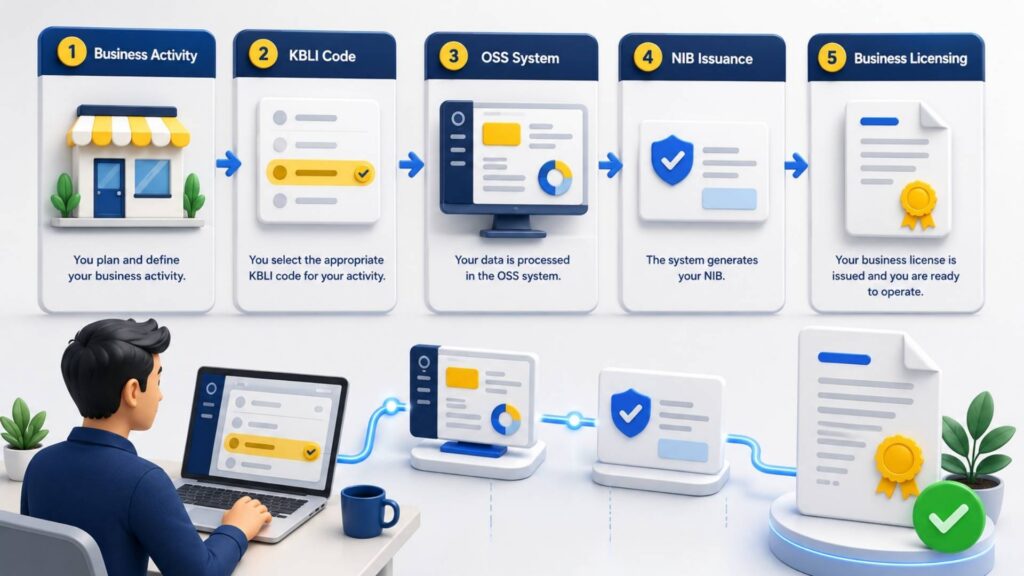
Quando si registra una società o si richiede una licenza commerciale in Indonesia, si ha a che fare con i seguenti enti Invio unico online OSS sistema.
OSS è la piattaforma di licenze online del governo. Viene utilizzata per rilasciare le NIB, o Numero di identificazione aziendale, e di elaborare molti tipi di licenze commerciali.
Ecco il flusso semplice:
Attività commerciale → codice KBLI → classificazione del rischio OSS → requisiti NIB e di licenza → conformità operativa
Quindi, prima che il sistema possa decidere di quale licenza avete bisogno, deve prima sapere quale attività svolgerà la vostra azienda. Per questo motivo è necessario scegliere il codice KBLI appropriato.
Il sistema OSS utilizza il KBLI per classificare la vostra attività commerciale. In base a tale classificazione, l'OSS può stabilire se la vostra attività è a rischio basso, medio-basso, medio-alto o alto.
La classificazione del rischio è importante perché influisce su ciò di cui avete bisogno prima di poter operare.
Per alcune attività a basso rischio, il NIB può essere sufficiente per iniziare. Per altre attività commerciali, l'azienda potrebbe aver bisogno di ulteriori certificati standard, verifiche, approvazioni, licenze settoriali o permessi tecnici da parte di un ministero o di una direzione generale.
È qui che alcuni imprenditori si sorprendono.
Ricevono un NIB e pensano: “Bene, la mia attività è completamente autorizzata”. Ma poi scoprono che la loro attività ha bisogno di un'altra approvazione prima di poter operare legalmente. Ecco perché non bisogna considerare il NIB come la fine della conformità.
Il NIB è il numero di identificazione dell'azienda. Ma a seconda del codice KBLI e del livello di rischio, potrebbe non essere l'unica licenza necessaria.
Come è strutturato un codice KBLI
Un codice KBLI ha una struttura gerarchica. Ciò significa che inizia in modo ampio e poi diventa più specifico.
Immaginate una biblioteca scolastica. Innanzitutto, i libri sono divisi in grandi sezioni come scienza, storia, narrativa e arte. Poi ogni sezione è suddivisa in argomenti più piccoli. Poi ogni libro ha il suo posto preciso.
KBLI funziona in modo simile.
La prima cifra o categoria indica il settore generale. I livelli successivi lo restringono. L'ultimo codice KBLI a cinque cifre indica l'attività commerciale più specifica.
Una struttura semplificata è la seguente:
| Livello | Cosa significa | Spiegazione semplice |
| Categoria | Ampio settore | Esempio: commercio, edilizia, alloggio, informazione, finanza. |
| Gruppo principale | Settore più specifico | Esempio: commercio all'ingrosso e al dettaglio |
| Gruppo | Campo di attività più ristretto | Esempio: commercio all'ingrosso di determinati beni |
| Sottogruppo | Attività più dettagliate | Esempio: tipo specifico di attività di trading |
| Codice KBLI a cinque cifre | Esatta classificazione aziendale | Il codice utilizzato in OSS e le licenze aziendali |
Ecco perché una cifra può cambiare il significato.
Un codice apparentemente simile potrebbe non coprire la stessa attività. Un codice può riguardare il commercio all'ingrosso. Un altro può riguardare il commercio al dettaglio. Uno può riguardare una piattaforma. Un altro può riguardare lo sviluppo di software. Uno può riguardare la ricettività. Un altro può riguardare il leasing immobiliare.
Quindi, quando cercate i codici KBLI, non guardate solo il titolo. Leggete la descrizione. Controllate quali attività sono incluse e quali sono escluse.
Le parti incluse ed escluse sono molto importanti. A volte un codice sembra corretto all'inizio, ma le note di esclusione mostrano che la vostra attività appartiene a un altro luogo.
KBLI 2025: Perché la nuova versione è importante

Per anni, molti hanno usato il KBLI 2020 come riferimento principale. Ma ora l'Indonesia è passata alla transizione verso il KBLI 2025.
KBLI 2025 è stato creato perché le attività commerciali stanno cambiando. L'economia non è più la stessa di anni fa. Oggi le imprese possono lavorare nell'intelligenza artificiale, nelle piattaforme digitali, nella monetizzazione dei creatori, nello streaming, nella produzione di contenuti online, nella cattura e nello stoccaggio del carbonio, nelle energie rinnovabili, nei servizi legati alle criptovalute e in altre attività moderne.
Le classificazioni più vecchie non sempre coglievano chiaramente questi nuovi modelli.
Il KBLI 2025 introduce quindi cambiamenti chiave per rendere la classificazione più pertinente. Aiuta il governo a classificare le attività economiche che non si adattavano perfettamente al KBLI 2020.
Questo è utile perché molte aziende moderne non sono più semplici.
Un'azienda può vendere prodotti fisici, gestire una piattaforma online, produrre contenuti digitali, gestire la logistica, elaborare pagamenti e fornire servizi in abbonamento. Un'attività può essere il commercio. Un'altra può essere la tecnologia. Un'altra può richiedere un'approvazione settoriale.
Ecco perché il giusto codice KBLI deve seguire l'attività effettiva, non solo l'immagine del marchio.
Ad esempio, un'azienda che “gestisce un'attività digitale” può dover essere classificata in modo diverso a seconda di ciò che fa:
- Costruisce software per i clienti
- Gestisce un portale web
- Gestisce una piattaforma digitale commerciale
- Produce contenuti
- Vende prodotti online
- Fornisce servizi di marketing
- Gestisce la tecnologia di pagamento o finanziaria
- Offre servizi di elaborazione dati o cloud
Non si tratta sempre della stessa attività legale.
Il KBLI 2025 intende rendere più chiare queste categorie.
Le aziende esistenti hanno bisogno di una nuova licenza a causa della KBLI 2025?
È qui che la risposta deve essere attenta.
Il passaggio alla KBLI 2025 non significa che ogni azienda esistente perda improvvisamente la propria licenza. In base alle spiegazioni pubbliche del governo, le licenze commerciali rilasciate prima dell'implementazione del KBLI 2025 rimangono valide.
Quindi non fatevi prendere dal panico.
Tuttavia, le aziende possono avere la necessità di adeguare il proprio KBLI attraverso l'OSS o l'AHU se si verifica un reale cambiamento nella sostanza dell'attività. Ad esempio, se l'azienda cambia il suo scopo, l'ambito di attività o le operazioni effettive, potrebbe essere necessario rivedere il KBLI.
Se non ci sono cambiamenti sostanziali, il governo ha spiegato che la conversione può essere gestita attraverso il sistema sulla base della tabella di conversione ufficiale.
Tuttavia, questo non significa che i proprietari di aziende debbano ignorare il KBLI 2025. Significa semplicemente che la transizione deve essere gestita in modo corretto e non emotivo.
Se la vostra azienda è già operativa, verificate se:
- Il vostro KBLI esistente corrisponde ancora alla vostra attività reale
- I documenti aziendali corrispondono ai dati OSS
- Le licenze commerciali corrispondono alle attività effettive
- La vostra attività è cambiata dalla fondazione dell'azienda
- Il codice KBLI 2020 ha una conversione uno-a-uno, uno-a-molti o molti-a-uno secondo KBLI 2025.
- La vostra azienda intende modificare l'atto costitutivo, l'indirizzo, gli azionisti, gli amministratori, l'ambito di attività o le licenze.
Questo è particolarmente importante per Aziende PT PMA perché i cambiamenti possono riguardare le norme sulla proprietà straniera, la pianificazione degli investimenti minimi e i requisiti per le licenze.
KBLI e le regole sulla proprietà straniera
Uno dei motivi principali per cui gli investitori stranieri devono controllare attentamente la KBLI è la proprietà straniera.
L'Indonesia consente gli investimenti stranieri in molti settori, ma non tutti sono trattati allo stesso modo. Alcuni settori sono completamente aperti. Alcuni hanno dei limiti. Alcuni richiedono condizioni speciali. Alcuni sono riservati alle imprese locali o a determinate categorie di imprese. Alcune attività possono essere chiuse o limitate per le imprese straniere.
Il punto chiave è questo:
Le norme sulla proprietà straniera sono spesso legate al settore di attività, che viene identificato attraverso il KBLI.
Quindi, prima di impostare un PT PMA, È necessario verificare se la KBLI scelta consente la proprietà straniera e, in caso affermativo, in che misura.
Un'attività che sembra semplice dal punto di vista del marketing può non esserlo dal punto di vista normativo.
Ad esempio, la “vendita di prodotti in Indonesia” può essere commercio all'ingrosso, commercio al dettaglio, distribuzione all'importazione, gestione di un mercato o supporto al commercio elettronico. Ognuno di essi può avere conseguenze diverse in termini di proprietà e licenze.
Ecco perché le aziende straniere non dovrebbero limitarsi a chiedere: “Posso avere un'attività in Indonesia?”.”
La domanda migliore è:
Gli investitori stranieri possono possedere questa esatta attività commerciale sotto questo esatto codice KBLI, su questa esatta scala commerciale, con questo esatto modello operativo?
Questa domanda è più lunga, ma è più sicura.
KBLI e licenze commerciali: Perché un codice può cambiare i requisiti
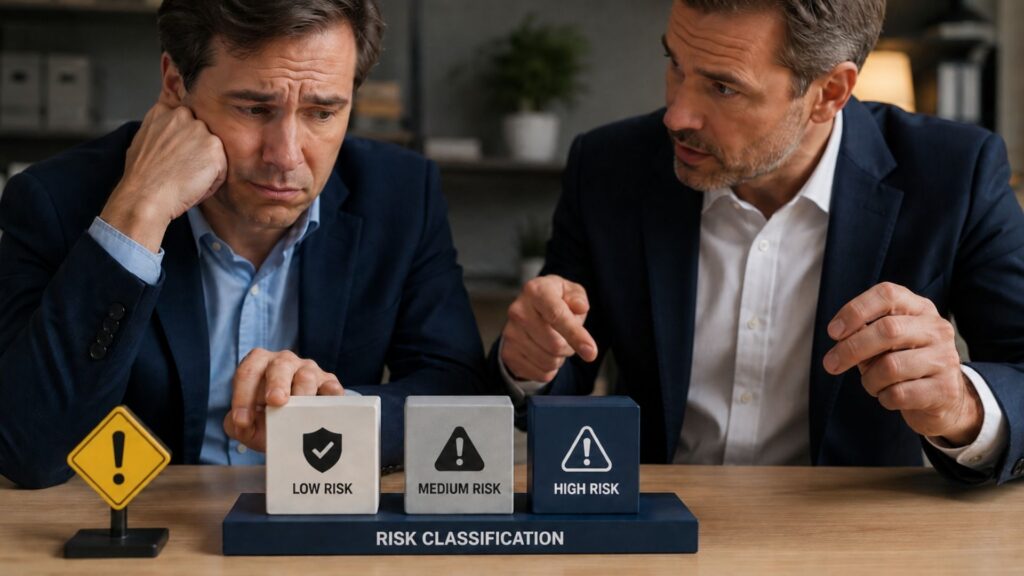
Il vostro codice KBLI aiuta l'OSS a decidere la classificazione del rischio della vostra attività.
La classificazione del rischio influisce sulle licenze commerciali necessarie.
In parole povere:
- Attività a basso rischio potrebbe essere sufficiente un NIB.
- Attività a rischio medio-basso può avere bisogno di un NIB e di un certificato standard basato sull'autodichiarazione.
- Attività a rischio medio-alto potrebbe essere necessario un NIB e un certificato standard verificato.
- Attività ad alto rischio possono avere bisogno di un NIB e di una licenza commerciale prima di operare.
Il requisito esatto dipende dall'attività e dalle norme vigenti.
Per questo motivo la stessa ragione sociale può avere obblighi di licenza diversi a seconda del KBLI scelto.
Supponiamo che due aziende utilizzino entrambe la parola “tecnologia” nel loro marchio. Una costruisce siti web. Una elabora transazioni finanziarie. Una memorizza dati personali. Una gestisce un mercato online. Una sviluppa strumenti di intelligenza artificiale per l'assistenza sanitaria. Possono sembrare tutte aziende tecnologiche, ma i requisiti di licenza potrebbero non essere gli stessi.
In Indonesia, l'attività è importante.
Il codice KBLI appropriato aiuta il sistema a classificare l'attività.
Guida passo passo alla ricerca del giusto codice KBLI
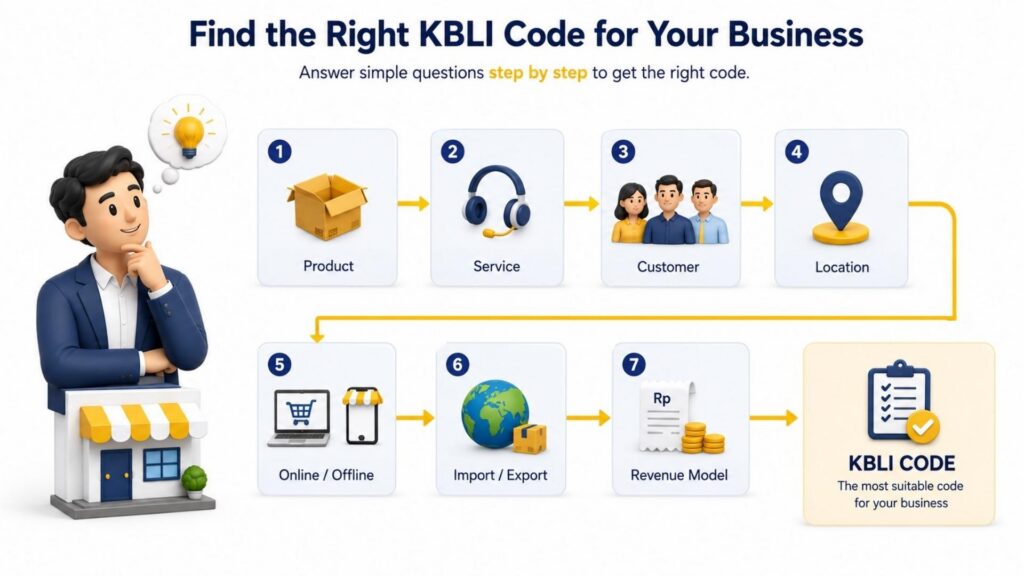
Ecco un semplice procedimento da seguire.
Fase 1: Scrivere la propria attività commerciale in una frase chiara
Non utilizzate una frase di fantasia per il pitch deck. Usate una frase normale.
Invece di:
“Siamo un ecosistema di lifestyle integrato per i consumatori moderni”.”
Scrivere:
“Vendiamo prodotti importati per la decorazione della casa direttamente ai clienti attraverso un negozio online”.”
La seconda frase è molto più utile per la selezione di KBLI.
Fase 2: separare l'attività principale dalle attività di supporto
La vostra attività principale è il modo in cui l'azienda guadagna.
Le attività di supporto sono quelle che l'azienda svolge a sostegno dell'attività principale.
Ad esempio, se gestite un ristorante, il social media marketing è di supporto al ristorante. Non significa automaticamente che la vostra azienda abbia bisogno di una KBLI per la produzione di contenuti.
Se vendete prodotti online, fotografare i vostri prodotti favorisce le vendite. Non significa automaticamente che la vostra azienda sia una società di produzione di media.
Questa distinzione consente di evitare di aggiungere inutilmente più codici KBLI.
Fase 3: Ricerca dei codici KBLI attraverso riferimenti ufficiali o di fiducia
Utilizzate innanzitutto le fonti ufficiali, come i riferimenti BPS e il sistema OSS. Potete anche utilizzare strumenti di ricerca di KBLI affidabili, ma non affidatevi ad essi alla cieca.
Quando si cercano i codici KBLI, controllare:
- Il titolo del codice
- La descrizione
- Attività incluse
- Attività escluse
- Codici correlati
- Classificazione del rischio OSS
- Restrizioni alla proprietà straniera
- Requisiti di licenza
Fase 4: verificare se il codice corrisponde alle operazioni reali
È qui che si verificano molti errori.
Un codice può sembrare vicino, ma se la descrizione non corrisponde a ciò che farete, continuate a cercare.
Ad esempio, un codice può riguardare il commercio all'ingrosso, ma la vostra azienda vende direttamente ai clienti finali. Un altro codice può riguardare lo sviluppo di software, ma la vostra attività reale è la gestione di una piattaforma digitale commerciale. Un altro ancora può riguardare il settore immobiliare, ma la vostra attività effettiva è quella di alloggio turistico a breve termine.
I dettagli sono importanti.
Passo 5: controllare le norme sulla proprietà straniera
Se la società ha azionisti stranieri, non saltare questo passaggio.
Chiedete:
- Questa KBLI è aperta agli investimenti stranieri?
- È consentita la proprietà straniera del 100%?
- Esiste un tetto massimo di proprietà straniera?
- L'attività è riservata alle imprese locali?
- L'attività richiede una partnership con una cooperativa o con l'UMKM?
- Le dimensioni dell'azienda influiscono sull'ammissibilità?
Fase 6: Verifica della classificazione del rischio e dei permessi OSS
Prima di scegliere il codice, verificate cosa richiede il sistema OSS.
È possibile che si attivi un codice:
- Solo NIB
- Certificato standard
- Certificato standard verificato
- Licenza commerciale
- Approvazione ambientale
- Idoneità della posizione
- Permesso settoriale
- Certificati standard aggiuntivi
- Approvazione da parte di un ministero o di una direzione generale
Fase 7: Verificare se il luogo in cui ci si trova supporta l'attività
Questo è importante per ristoranti, strutture ricettive, immobili, magazzini, fabbriche, negozi al dettaglio e attività turistiche.
Un'attività commerciale può essere legale in Indonesia, ma non è adatta ad ogni luogo.
Ad esempio, un'attività di villa, un bar, un magazzino o un'attività manifatturiera possono avere la necessità di rispettare la zonizzazione, la funzione dell'edificio, i requisiti ambientali e le norme locali.
Passo 8: Confermare prima della registrazione
Prima che il notaio concluda l'atto o prima che i dati dell'OSS vengano inviati, rivedete tutto.
Verificare che il KBLI corrisponda:
- La vostra reale attività commerciale
- L'atto aziendale
- I vostri dati OSS
- Il vostro piano di proprietà all'estero
- Il vostro piano di investimento
- La vostra posizione
- Il vostro percorso di licenza
- Il vostro piano di espansione futura
Questo è il momento più sicuro per correggere gli errori.
Esempi di pensiero di KBLI per le più comuni aziende di investitori stranieri
Gli esempi che seguono non costituiscono un parere legale definitivo. Hanno solo lo scopo di mostrare come ragionare.
| Piano aziendale dell'investitore | Domande più specifiche da porre | Possibile punto di partenza KBLI da verificare | Cosa controllare prima della registrazione |
| Aprire un ristorante con servizio di ristorazione | I clienti mangeranno in un ristorante permanente? | 56101 - Restoran | Requisiti di sicurezza alimentare, certificato di igiene, norme halal se pertinenti, permesso di vendita di alcolici, idoneità del luogo e norme di proprietà della PT PMA. |
| Aprire un bar o una caffetteria | L'attività principale consiste nel servire bevande in loco? | 56303 - Rumah Minum/Kafe | Se si tratta principalmente di bevande o di un servizio di ristorazione completo, i requisiti per la manipolazione degli alimenti, l'autorizzazione per gli alcolici se pertinente, la funzione dell'edificio e la zonizzazione locale. |
| Affittare una villa ai turisti | Si tratta di alloggi turistici a breve termine e non di locazioni immobiliari a lungo termine? | 55193 - Vila o un altro codice di alloggio a breve termine se il tipo di proprietà è diverso | Licenze turistiche, zonizzazione, uso degli edifici, tasse locali, controllo dei terreni/edifici e se l'attività è consentita per la struttura proprietaria. |
| Affittare un edificio o un'unità a lungo termine | Si tratta di un'attività di affitto di immobili e non di alloggio in stile alberghiero? | 68111 - Immobiliare Yang Dimiliki Sendiri Atau Disewa | I diritti fondiari, l'uso degli edifici, la struttura del contratto di locazione, il trattamento fiscale e la conformità dell'attività alle norme in materia di proprietà e investimenti stranieri. |
| Costruire software per i clienti | L'azienda scrive, modifica, testa o supporta il software? | 6201 - Aktivitas Pemrograman Komputer o codici derivati più specifici | Che si tratti di sviluppo software, programmazione AI, blockchain, sviluppo di videogiochi o consulenza informatica. Verificate anche le esclusioni relative a dati, fintech e piattaforme. |
| Gestire un mercato o una piattaforma commerciale | La piattaforma mette in contatto acquirenti e venditori, supporta le transazioni o media servizi online? | 63122 - Portale Web e Piattaforma Digitale Dengan Tujuan Komersial | Obblighi PMSE/PPMSE, protezione dei consumatori, regole del sistema elettronico, esclusione o meno dell'attività di pagamento/fintech e autorizzazioni settoriali. |
| Fornire consulenza gestionale | L'azienda fornisce consulenza in materia di strategia aziendale, operazioni, risorse umane, marketing o gestione? | 70209 - Aktivitas Konsultasi Manajemen Lainnya | Che si tratti di un vero e proprio servizio di consulenza gestionale o di un servizio legale, fiscale, contabile, ingegneristico, di consulenza sugli investimenti o di un altro servizio professionale regolamentato. |
| Importazione e vendita di articoli per la casa ai negozi | L'azienda venderà all'ingrosso a dettaglianti, distributori o altre aziende? | 464 / 46491 - Perdagangan Besar Barang Keperluan Rumah Tangga | Attività all'ingrosso e al dettaglio, diritti di importazione, regole specifiche per i prodotti, magazzino/localizzazione, modello di distribuzione e regole sulla proprietà straniera. |
| Vendere prodotti direttamente ai consumatori online | L'azienda venderà i propri prodotti direttamente attraverso un sito web, i social media o un marketplace? | 4791 o un derivato specifico come 47912, 47913, 47914 o 47919, a seconda della categoria di prodotto. | Categoria di prodotto, modello di vendita al consumatore, canale online/offline, autorizzazioni per prodotti alimentari/cosmetici/regolamentati e se l'attività è aperta alla PT PMA. |
| Produrre contenuti digitali a pagamento | L'azienda crea video, media, annunci, corsi o contenuti di intrattenimento? | Produzione di contenuti, pubblicità, formazione o KBLI legati ai media, a seconda dell'output reale. | Sia che le entrate provengano da servizi di produzione, pubblicità, abbonamenti, vendita di corsi, gestione dei creatori o funzionamento della piattaforma. |
Per questo motivo, il codice KBLI giusto non viene scelto in base alla ragione sociale. Viene scelto in base all'attività dell'azienda.
È possibile modificare o aggiungere un KBLI in un secondo momento?
Sì, le aziende possono modificare, aggiungere o rimuovere i codici KBLI in un secondo momento. Ma il processo dipende dai documenti dell'azienda, dai dati OSS e dal tipo di modifica.
Se la nuova attività è già contemplata nell'atto aziendale, l'aggiornamento dell'OSS può essere più semplice.
Se la nuova attività commerciale non è contemplata nell'atto aziendale, potrebbe essere necessario modificare l'atto stesso. La modifica può richiedere l'intervento di un notaio e l'aggiornamento del sistema governativo.
In seguito, l'azienda potrebbe dover aggiornare i propri dati OSS e verificare se la nuova attività richiede ulteriori licenze.
Prima di aggiungere un KBLI, chiedete:
- Questa attività fa veramente parte dell'azienda?
- È già contemplato nell'atto costitutivo della società?
- Cambia l'ambito di attività dell'azienda?
- Influisce sulla proprietà straniera?
- Si tratta di un nuovo requisito di investimento minimo?
- Richiede una nuova ubicazione o un nuovo permesso?
- Cambia la classificazione del rischio?
- Richiede ulteriori certificati standard o approvazioni settoriali?
Il cambio di KBLI è possibile, ma va fatto con attenzione.
Note speciali per le società di investimento straniere
Se si sta configurando un PT PMA, prima di scegliere il codice è bene fare un po' di attenzione.
Le società di investimento straniere dovrebbero controllare più attentamente il KBLI perché ogni codice può influenzare la proprietà, gli investimenti e la pianificazione delle licenze.
Prima di iscriversi, chiedere:
- Il KBLI è aperto agli investimenti stranieri?
- Gli investitori stranieri possono possedere il 100% della società secondo questo codice?
- Ci sono restrizioni alla proprietà straniera?
- L'attività è riservata alle imprese locali?
- L'attività richiede una certa dimensione aziendale?
- Quale investimento minimo si applica?
- Il calcolo dell'investimento esclude i terreni e gli edifici?
- Il codice richiede licenze specifiche?
- La sede dell'attività è adatta?
- I documenti aziendali corrispondono all'attività?
- Un'espansione futura richiederà ulteriori codici KBLI?
Per gli investitori stranieri, la scelta del codice KBLI appropriato fa parte della pianificazione degli investimenti.
Non si tratta solo di amministrazione.
Domande frequenti sull'Indonesia KBLI
Che cos'è la KBLI in Indonesia?
KBLI sta per Klasifikasi Baku Lapangan Usaha Indonesia. È la classificazione industriale standard indonesiana utilizzata per classificare le attività economiche in Indonesia.
Chi emette la KBLI?
Il KBLI è emesso dal Badan Pusat Statistik, noto anche come Statistics Indonesia.
Il KBLI è necessario per OSS e NIB?
Sì. Il sistema OSS utilizza il KBLI per comprendere la vostra attività commerciale e determinare i vostri requisiti NIB e di licenza.
Che cos'è un codice KBLI a cinque cifre?
Il codice KBLI a cinque cifre è il codice di classificazione aziendale specifico utilizzato per identificare un particolare tipo di attività commerciale.
Che cos'è KBLI 2025?
KBLI 2025 è il sistema di classificazione aggiornato che migliora e amplia le categorie KBLI, in particolare per le attività più recenti come le piattaforme digitali, la produzione di contenuti, l'intelligenza artificiale, la cattura e lo stoccaggio del carbonio, le energie rinnovabili e altri modelli di business emergenti.
La KBLI influisce sulla proprietà straniera?
Sì. Per gli investitori stranieri e le società PT PMA, la KBLI può influenzare se l'azienda è aperta alla proprietà straniera, se la proprietà è limitata e se si applicano condizioni speciali.
Un'azienda può avere più codici KBLI?
Sì, un'azienda può avere più codici KBLI se svolge davvero più attività commerciali. Ma l'aggiunta di più codici KBLI può anche aumentare gli obblighi di licenza, investimento e conformità.
Cosa succede se scelgo il KBLI sbagliato?
L'azienda può incorrere in ritardi nella concessione di licenze, permessi non corretti, restrizioni operative, modifiche agli atti, aggiornamenti degli OSS o problemi di conformità.
Posso cambiare il mio KBLI in un secondo momento?
In molti casi, sì. Ma le modifiche possono richiedere l'aggiornamento dei documenti aziendali, dei dati delle UTA, dei dati OSS e dei requisiti di licenza.
Il NIB è sufficiente per iniziare a operare?
Non sempre. Per le attività a basso rischio, il NIB può essere sufficiente. Per altre attività, l'azienda potrebbe aver bisogno di certificati standard, certificati verificati, licenze commerciali o autorizzazioni settoriali.
Devo utilizzare KBLI 2020 o KBLI 2025?
La KBLI 2025 è la classificazione più recente, ma la transizione deve essere gestita attraverso il sistema ufficiale. Le licenze esistenti rilasciate prima dell'implementazione non sono automaticamente invalide. Verificare la guida ufficiale alla conversione e i requisiti OSS.
Come faccio a scegliere il codice KBLI giusto?
Iniziate descrivendo chiaramente la vostra reale attività commerciale. Quindi verificate la descrizione ufficiale della KBLI, il livello di rischio OSS, le norme sulla proprietà straniera, i requisiti di licenza, l'idoneità della sede e l'allineamento dei documenti aziendali.
Sei pronto a richiedere o prolungare il tuo visto?
Lascia che siano i nostri specialisti a gestire la tua domanda di visto.



Modifica delle norme relative alle agevolazioni fiscali in Indonesia nel 2026
Per saperne di più
Linee guida sul calendario di conformità PT PMA 2026
Per saperne di più
 English
  Bahasa Indonesia
  Español
  Italiano
  Français
  日本語
日本語  Nederlands
  繁體中文
繁體中文  한국어
한국어  Norsk bokmål
  Svenska
  Dansk
Dansk  Türkçe
  Polski
  香港中文
香港中文  简体中文
简体中文  Українська
  Русский
  Bahasa Melayu