













Hvilket visum trenger utlendinger for å drive en foreningsklubb i Indonesia?

Foreigners often create run clubs, writers’ circles, digital-nomad groups, and other communities in Indonesia. The legal question begins when a casual gathering grows into a structured activity with branding, recurring events, sponsors, staff, fees, or public promotion.
At that point, the organizer may need more than permission to stay in Indonesia. Their visa or ITAS, work or investor role, business structure, and event approvals may all need to match the way the community actually operates.
What Visa Do You Need to Run a Community Club in Indonesia?
Indonesia does not have one specific “community club visa.” The correct route depends on what you actually do and which Indonesian visa type matches those activities.
Joining a weekly run, attending a book discussion, or meeting friends is different from creating a branded club, managing recurring events, directing volunteers, signing sponsorship agreements, or earning money from memberships. So, you may need to consider these four separate issues:
Your immigration status
Whether your duties count as work or management
The legal entity and licensed activities behind the club
Permits for events, venues, roads, or public spaces
Innholdsfortegnelse
Running a Community Involves More Than Choosing a Visa
When people ask, “What visa do I need to run a community in Bali?” they often expect the name of one visa.
The more accurate answer starts with the activity, not the label.
A community can be a private social circle, an informal public meetup, a volunteer program, a membership organization, a marketing channel, an events business, or part of another company. Two groups may both call themselves a run club while operating in completely different ways.
One might be a few friends meeting at the same place each weekend. Another might have a brand, registration system, paid staff, commercial sponsors, merchandise, photographers, venue agreements, and hundreds of participants.
Immigration authorities and other agencies can look at what happens in practice. Calling an operation a “community” does not remove employment, business, licensing, safety, or public-order obligations.
Before choosing a visa, answer this question:
Are you participating in the community, or are you responsible for running it?
Joining a Club Is Different From Operating One
Attending a community activity is not the same as controlling, managing, or representing the organization behind it. The duties you perform can affect which immigration, employment, and business rules apply.
Joining an activity
A participant normally attends an activity arranged by someone else. They do not control the organization, manage its money, negotiate with sponsors, direct workers, or represent the club to venues and authorities.
Running the operation
- Create the brand and public identity
- Set the schedule, rules, and membership conditions
- Recruit members or approve applications
- Book venues or arrange access to public areas
- Hire, supervise, or coordinate staff and volunteers
- Collect fees, donations, or commercial payments
- Negotiate sponsorships and partnerships
- Sell merchandise, workshops, or other services
- Direct events and accept operational responsibility
- Promote the club as part of another business
This distinction matters because permission to join a sponsored social program is not the same as permission to establish and independently manage a local organization.
When Does an Informal Group Become an Organized Activity?
There is no simple public checklist saying that a group becomes a business after a fixed number of members or meetings. You need to consider the whole arrangement.
A casual gathering is generally easier to distinguish when it remains private, small, irregular, non-commercial, and free from formal management. The risk changes as the operation develops structure and public reach.
Indicators of a more organized activity include:
- A fixed weekly or monthly program
- Public advertising on social media
- A dedicated name, logo, website, or membership platform
- Registration forms or participant screening
- Paid instructors, hosts, photographers, or administrators
- Sponsors, brand activations, or promotional agreements
- Ticket sales, subscriptions, merchandise, or commissions
- Large attendance
- Repeated use of roads, beaches, parks, or other public spaces
- Formal relationships with venues, suppliers, or local businesses
- Staff or volunteers taking instructions from the foreign founder
None of these factors should be read as an automatic legal verdict by itself. Together, however, they can show that the group is being operated rather than casually attended.
Can a Foreigner Run a Free Community in Indonesia?
“Free” describes the price paid by participants. It does not fully describe the organizer’s activity.
A club can charge nothing and still involve regular management, business promotion, sponsorship, brand building, staff coordination, public-space use, or an economic benefit for another company.
For example, a free networking group might funnel customers into a coworking space. A no-fee fitness club might promote a wellness brand. A writers group could support paid courses or consulting. A run club may receive sponsorship, free products, venue benefits, or promotional exposure even when runners do not buy tickets.
That does not mean every free meetup requires a company and a Work ITAS. It means you should not use “nobody pays” as the only compliance test.
Ask who gains value, who controls the operation, and what duties the foreign organizer performs.
Which Visa or Immigration Route May Apply?
The correct route depends on your role and the way the community operates. The categories below explain the main possibilities, but they should not be treated as interchangeable shortcuts.
Joining an Existing Social, Sports, or Writers Club
DeltakerIf you are simply attending an existing community, your position is usually closer to that of a participant than an operator.
You are not automatically running a local organization because you join a weekend run, attend a writing circle, or participate in an open discussion. However, your activities must remain consistent with the purpose and conditions of your stay in Indonesia.
The situation changes when you begin managing the group, representing it, collecting money, directing people, negotiating with sponsors, or organizing public events.
Holding an Occasional Private Meetup
Informal activityA private gathering among friends is different from launching a public club. Keeping the gathering small, informal, irregular, and genuinely social reduces the signs of commercial or professional operation.
However, an activity described as a private meetup may begin to resemble a public event when it is heavily promoted, repeatedly scheduled, commercially sponsored, or open to a large audience.
Participating in a Sponsored Social or Volunteer Program
C6 or C6BIndonesias C6 social-activities visa may be relevant for a documented social program supported by a government body or private institution. Indonesia also has a C6B category for voluntary service.
These routes should not automatically be treated as permission to create and independently operate your own community club.
A genuine volunteer arrangement should have a real host, a defined program, a clear social purpose, and duties that remain consistent with the visa. Calling an activity “volunteering” does not automatically make every unpaid management role permitted.
Managing a Community as an Employee
Work ITASIf an Indonesian organization hires you to manage programs, coordinate events, oversee members, or perform another defined job, it may need to sponsor an appropriate Arbeidsvisum Indonesia (KITAS) and obtain the necessary manpower authorization.
The employer may also need approved manpower authorization, including an RPTKA , under Indonesia’s foreign-worker rules. The sponsor, approved job title, position, and actual duties should match.
Authorization for one employer or position should not be treated as general permission to operate an unrelated community. When the community forms part of the employer’s licensed business, your role and responsibilities should be properly documented within that structure.
Running a Community Through Your Own Indonesian Company
Investor ITASAn E28A Investorvisum Indonesia (KITAS) may be relevant when you hold at least Rp10 billion in shares in the sponsoring Indonesian company and perform activities permitted for an investor or qualifying company officer.
An Investor ITAS is not a universal activity permit. The company must be properly established, and its business classifications and licenses must cover the activities it actually performs.
When a community operates commercially, the organizer may need to set up a PT PMA in Indonesia with suitable KBLI business classifications. Public events may still require separate venue, safety, police, or local-government approvals.
For a monetized community, review:
- Whether a PT PMA may conduct the intended activities
- Which KBLI classifications apply
- Whether the founder qualifies for an investor or work route
- Who signs contracts and receives revenue
- Whether the company may sell memberships or event access
- Which operational and local licenses are required
Using an Indonesian Organization or Licensed Event Organizer
Local partnerSome communities operate through an existing Indonesian company, foundation, association, venue, or professional event organizer.
This may provide a lawful operational structure, but the relationship must be genuine. The Indonesian entity should not simply lend its name while a foreign founder independently controls the entire operation.
- Who owns and manages the program
- Who employs or contracts each worker
- Who receives membership or sponsorship income
- Who carries legal and safety responsibility
- Whether the foreigner’s immigration status covers their duties
- Whether the organization’s licenses cover the activity
A licensed local operator may help with permits and logistics. It does not automatically correct an unsuitable visa or unauthorized foreign role.
Remote Worker Visa Holders
E33GThe E33G remote worker visa is designed for living in Indonesia while performing duties for a company established outside Indonesia.
This route does not generally convert overseas remote-work permission into authorization to manage a local club, sell services in Indonesia, or operate an Indonesian business.
A remote worker may still participate in ordinary social activities. The concern begins when their community role becomes a separate local occupation, management position, or commercial operation.
Tourist and Business Visit Visa Holders
BesøksvisumA tourist visa is intended for visitor activities, not ongoing local work, community management, or business operation.
An Indonesia Business Visa may permit certain non-employment activities, such as business meetings or discussions, depending on the visa classification.
It should not be confused with permission to manage a local workforce, deliver paid services, collect membership fees, or operate recurring public events in Indonesia.
Using an Indonesian Organization or Licensed Event Organizer
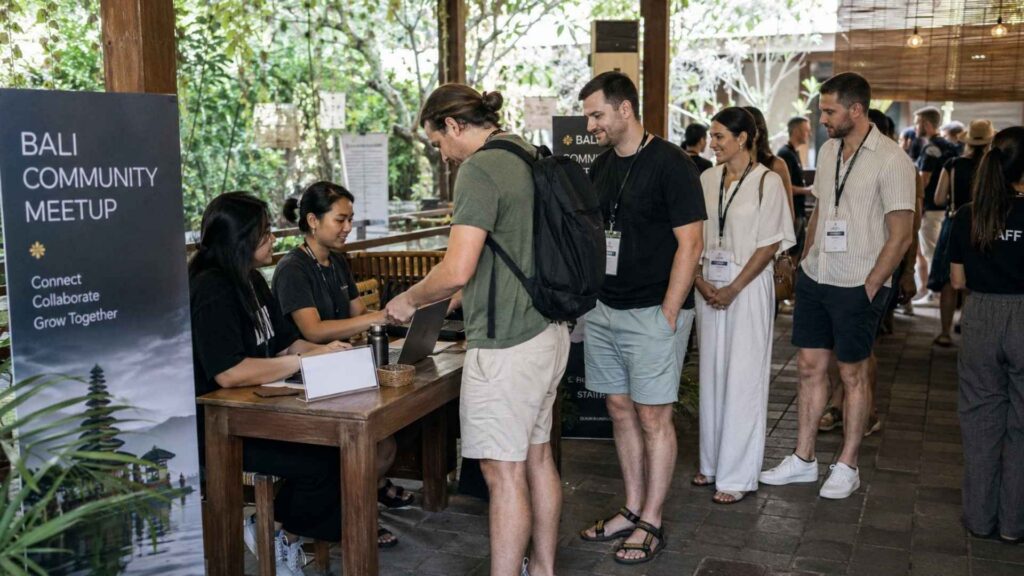
Some communities operate under an existing Indonesian company, foundation, association, venue, or professional event organizer.
This may provide a lawful operational structure, but the relationship must be real. The Indonesian entity should not serve merely as a name placed on documents while a foreigner independently controls everything.
You still need to determine:
- Who owns and manages the program
- Who employs or contracts each worker
- Who receives the income
- Who carries legal and safety responsibility
- Whether the foreigner’s immigration status covers their duties
- Whether the organization’s licenses cover the activity
A genuine licensed operator can help manage permits and logistics. It does not automatically correct an unsuitable visa or an unauthorized foreign role.
Remote Worker Visa Holders
The E33G remote worker visa is designed for living in Indonesia while performing duties for a company established outside Indonesia. The official requirements include an employment agreement with an overseas company.
Check the eligibility, income, employment-contract, and application requirements for the Remote Work Visa or Digital Nomad Visa Indonesia.
This route does not generally convert overseas remote-work permission into permission to run a local club, sell services in Indonesia, or manage an Indonesian operation.
A remote worker can still join social activities. The concern arises when the person’s community role becomes a separate local occupation or business.
Tourist and Business Visit Visa Holders
A tourist visa is intended for visitor activities, not ongoing local work or business operation.
En Indonesia Business Visa may allow specific non-employment business activities, such as meetings or discussions, depending on its classification. It should not be confused with authorization to manage a local workforce, deliver paid services, or run recurring events in Indonesia.
A useful rule is simple: do not choose a visit visa merely because the club has no office or because its activity looks casual on social media.
When Does a Community Become Commercial?
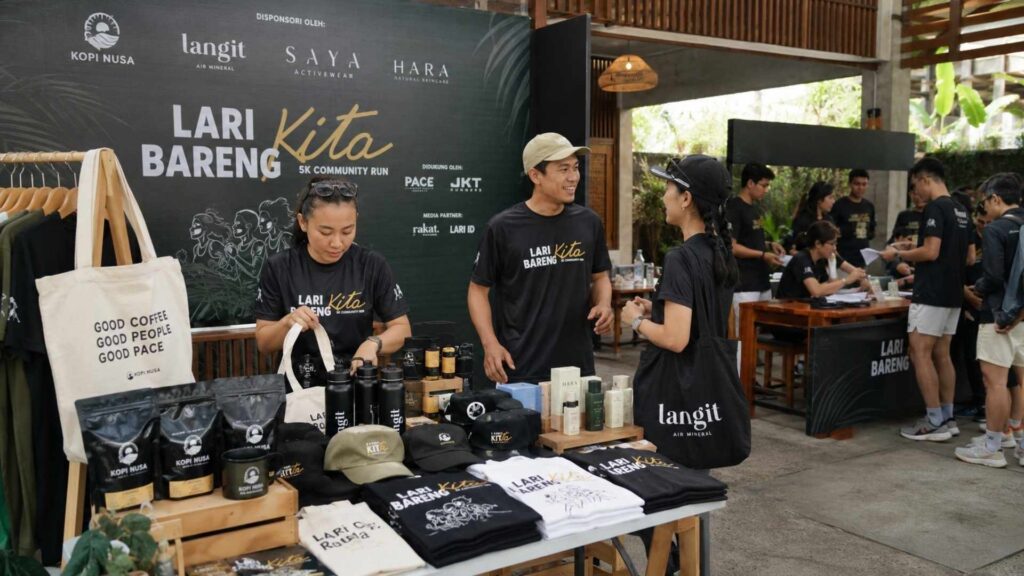
A club can become commercially connected before it looks like a conventional company.
Common signs include:
- Membership or joining fees
- Event tickets
- Paid workshops, coaching, or classes
- Sponsorship contracts
- Brand partnerships
- Merchandise sales
- Advertising revenue
- Affiliate commissions
- Venue commissions
- Paid access to a digital group
- Donations tied to benefits or services
- Promotion of another company’s products
- Lead generation for a founder’s main business
Commerciality is not limited to cash handed to the founder. Free products, promotional exposure, customer leads, cross-selling, or benefits provided to another company may also matter when authorities assess the real purpose of the activity.
Once the club earns money or supports a business, you should review the company structure, tax treatment, contracts, consumer obligations, and licensing alongside immigration status.
Examples by Community Type

Run club
A few friends running together is different from a public branded event. Review the organizer’s role, group size, use of roads or public spaces, registration system, sponsors, staff, safety planning, and frequency.
Writers club
A free private discussion group may remain largely social. The analysis changes when the organizer sells workshops, pays speakers, promotes publishing services, collects memberships, or operates the club as part of a commercial platform.
Digital nomad community
This type of group often crosses several categories. Social gatherings may be informal, while coworking partnerships, business networking, paid memberships, sponsored events, relocation services, and professional workshops create commercial connections.
Wellness or fitness community
Regular classes, coaching, instructors, health claims, paid packages, brand promotion, and venue agreements can move the activity beyond a casual meetup.
Charity or volunteer community
A social objective does not remove the need for a suitable host, lawful fundraising, proper organizational structure, and immigration permission matching each foreign participant’s duties.
Online community
An online group can still create local compliance questions when its organizer hosts physical events, sells Indonesian services, manages local workers, or operates through an Indonesian business. A community that remains genuinely overseas and online presents a different case from one built around regular local activities.
Eight Questions to Ask Before Launching the Club
Before promoting the first event, write down clear answers to these questions:
Who legally operates the community?
What work or management duties will the foreign founder perform?
Who receives fees, sponsorship money, commissions, or other benefits?
Is the group private, or is it promoted to the public?
Will activities happen repeatedly?
Are staff, instructors, speakers, performers, or volunteers involved?
Will the club use a venue, public road, beach, park, or tourism area?
Does the foreign organizer’s visa and position match those real duties?
Ofte stilte spørsmål
Can a foreigner run a free community in Bali?
Possibly, but the answer depends on what “run” means. A private gathering among friends is different from managing a recurring public organization. Review branding, scale, sponsorship, staff, public promotion, economic benefit, venue use, and the foreigner’s duties.
Can I organize a run club on a tourist visa?
A tourist visa should not be used as general permission to manage an ongoing local organization or operate recurring events. Attending a social run is different from directing the club. Seek a case-specific assessment before taking an organizer role.
Is the C6 visa suitable for starting a community?
The C6 category is designed for social activities supported by documentation from a relevant institution. It can be appropriate for participation in a genuine sponsored social program. It should not be assumed to authorize an independent foreigner-owned club, commercial operation, or unrelated management activity.
Can an E33G remote worker organize local events?
E33G covers duties for a company outside Indonesia. It does not automatically authorize a separate local occupation or Indonesian business. Occasional social participation is different from running a recurring public or commercial program.
Can an Investor ITAS holder operate a community?
It may be possible when the activity is conducted through the company in which the foreigner has invested, the company is licensed for the activity, and the foreigner’s duties fall within the permitted investor or corporate role. The ITAS alone does not replace company and event requirements.
Do sponsored events require additional permits?
They may. Sponsorship can create a commercial relationship, while the event itself may require venue, public-space, safety, police, local-government, or operational approvals. The exact requirements depend on the activity and location.
Do I need a PT PMA for a community club?
Not every informal group needs a PT PMA. A company becomes more relevant when the community operates commercially, signs contracts, employs people, collects revenue, or provides services. The appropriate entity depends on the purpose, ownership, business classification, and operating model.
Checklist Before You Start a Community in Indonesia
Do not start with the visa name. Start with a written description of the community.
State who will own it, who will organize each activity, how often it will operate, whether it accepts money or sponsorship, where events will take place, and what the foreign founder will do each week.
Then compare that operating model against:
- Immigration permission
- Employment or investor authorization
- The organization’s legal structure
- Licensed business activities
- Local event and venue requirements
This process may show that you can remain a participant in an informal group. It may show that you need to work through an existing Indonesian organization. It may also show that a PT PMA, Work ITAS, Investor ITAS, or licensed event partner is necessary.
The right answer comes from aligning the visa, role, entity, and activity. None of those elements should contradict the others.
Klar til å søke eller forlenge visumet ditt?
La visumspesialistene våre håndtere søknaden din.





 English
  Bahasa Indonesia
  Español
  Italiano
  Français
  日本語
日本語  Nederlands
  繁體中文
繁體中文  한국어
한국어  Norsk bokmål
  Svenska
  Dansk
Dansk  Türkçe
  Polski
  香港中文
香港中文  简体中文
简体中文  Українська
  Русский
  Bahasa Melayu