







Domicile Letter vs Residence Certificate SKTT in Indonesia
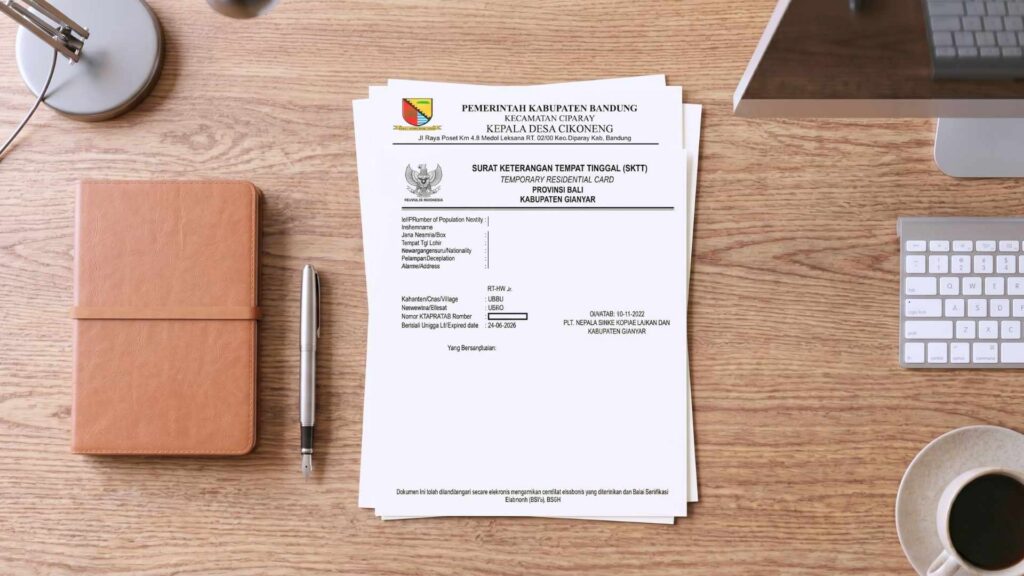
If you are a foreigner living in Indonesia, there is a good chance someone will eventually ask you for a лист про місце проживанняі SKTT, а residence certificate, а довідка про місце проживання, or some kind of official proof of your address.
And this is where many people get confused.
You may already have a visa. You may already have a KITAS. You may already have your passport, your sponsor letters, and your rental address. So why are there still more documents?
The simple answer is this: your visa or stay permit shows that you are allowed to stay in Indonesia, but it does not always prove where you live for local administrative purposes.
That is where the Лист про місце проживання і Residence Certificate SKTT come in.
The search term people often use is domicile letter vs residence certificate SKTT, but in real life, the confusion is usually more basic: “Which one do I need first?” “Who issues it?” “Is this from Immigration, the banjar, or the civil registration office?” “Do I need this for my KITAS extension, bank account, or vehicle purchase?”
Let’s walk through it slowly, as if you’re standing at the first office counter, trying to figure out what to prepare before you visit the next one.
Quick Answer: Domicile Letter and SKTT Are Not the Same Thing
A Лист про місце проживання, known in Indonesian as Surat Keterangan Domisili, is a letter confirming a local address. It confirms that you live at a specific address. In Bali, people often call this a banjar letter because the banjar or local authorities may be involved in confirming your address.
An SKTTабо Довідка про місце проживання, is a temporary residence certificate for foreign nationals who hold a дозвіл на тимчасове перебування, usually a KITAS or ITAS. It is an official document issued by the Civil Registration Officeяку також називають Дисдукапіл, Дукчапіль, Catatan Sipil, or the Population and Civil Registration office.
So, think of it like this.
Твій віза або дозвіл на перебування answers: “Are you legally allowed to stay in Indonesia?”
Твій лист про місце проживання answers: “Where do you currently live?”
Твій SKTT answers: “Has your residence status and address been recorded in the civil records system?”
That is the main difference.
A Domicile Letter is usually local address proof. An SKTT is formal civil registration proof for KITAS holders and other eligible foreign residents.
What Is a Domicile Letter in Indonesia?
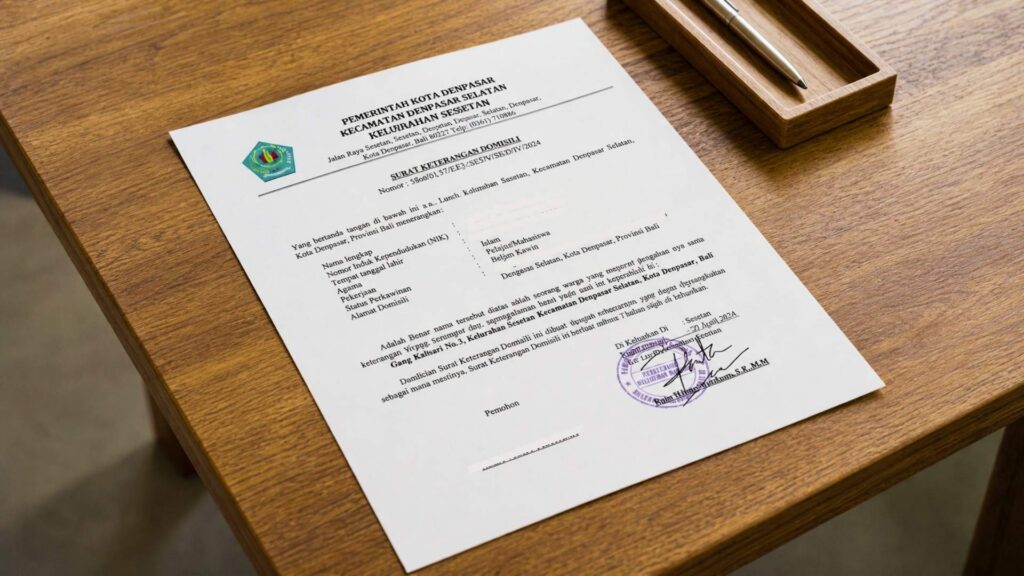
A Лист про місце проживанняабо Surat Keterangan Domisili, is a letter that confirms where you currently live in Indonesia. This letter is usually issued or confirmed by local authorities, such as the banjar in Bali, RT/RW, desa, kelurahan, village office, or another local office depending on your area.
A domicile letter is commonly used when your address matters, such as when applying for SKTT, updating your address, preparing KITAS or KITAP extension applications, opening a bank account, handling tax or school registration, or completing other administrative purposes. It can also be needed when you move to a new address and local authorities need to recognize where you now live.
To obtain one, you may need to prepare documents:
- Passport identity details
- Valid visa or stay permit, if applicable
- KITAS or KITAP, if you already have one
- Rental agreement, lease contract, or property stay confirmation
- Letter from your landlord or property owner
- Sponsor KTP and KK, if requested
- Application form from the local office
- Application letter, if requested
- Police Report Certificate or STM, if requested locally
- Your full address and contact details
The important thing to remember is: In Bali, foreigners often hear it called a banjar letter because address confirmation often starts with the local banjar. In Jakarta or other cities, the process may involve RT/RW, kelurahan, or apartment management.
What Is SKTT in Indonesia?
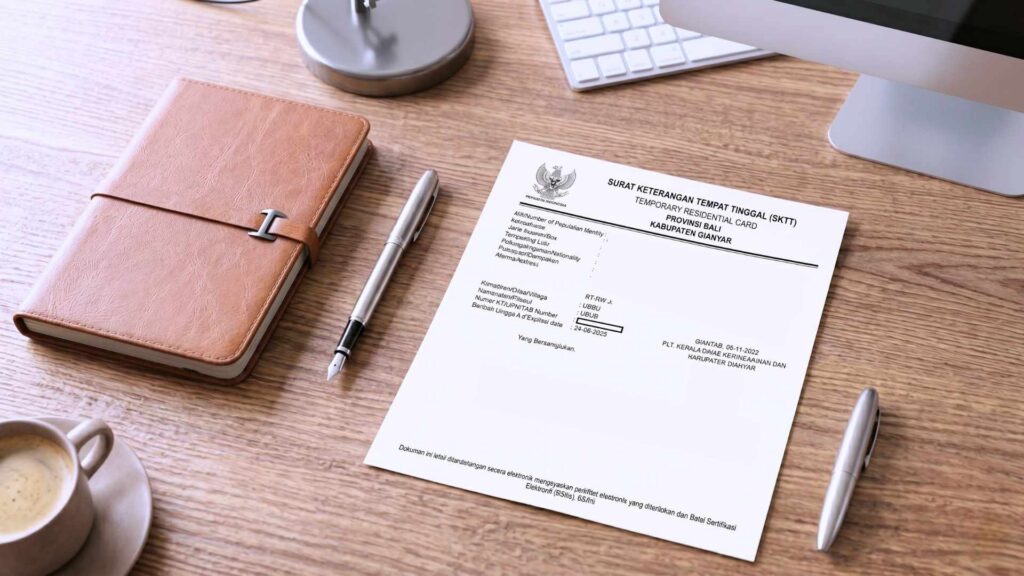
SKTT означає Довідка про місце проживання, which is commonly translated as a Residence Certificate, Residency Certificateабо Temporary Residence Certificate. It is an official document issued by the Population and Civil Registration Officeтакож відомий як Дисдукапіл, Дукчапіль, Catatan Sipil"У нас тут є Civil Registration Office, or the Civil Registry Office.
In simple words, SKTT records where a foreigner with a valid temporary stay permit lives in Indonesia. Your KITAS or ITAS proves your immigration status, while your SKTT records your residence status in the civil registration system. So when people say, “You need SKTT after KITAS,” they usually mean your stay permit is already active, and now your address needs to be registered with the local civil records office.
For KITAS holders, SKTT can be useful for many administrative purposes, such as opening certain bank accounts, preparing extension applications, registering a vehicle, updating civil records, or proving your address for official processes. If you later move toward permanent residency through KITAP, your civil registration document may change, but for temporary residents, SKTT is the main residence certificate to understand.
One important thing to remember: SKTT is not issued by Immigration. Immigration handles your visa, KITAS, KITAP, and stay permit. SKTT is handled by the civil registration office based on your registered address. That is why your address must be clear and consistent across your passport, KITAS, sponsor letters, domicile letter, and other supporting documents.
Do Tourists Need a Domicile Letter or SKTT?
Usually, tourists do not need SKTT.
If you are in Indonesia on a visa on Arrival or a short-stay visa, you generally do not need to apply for SKTT because SKTT is linked to a temporary stay permit, such as KITAS or ITAS.
A domicile letter may also not be necessary for a normal short trip. If you are staying in a hotel, villa, or guesthouse as a tourist, your accommodation usually handles guest reporting according to local regulations.
But if you are moving into longer-term accommodation, applying for a new stay permit, changing address, or starting a longer administrative process, a local address letter may become relevant.
Do KITAS Holders Need SKTT?
In most cases, yes, KITAS holders should prepare SKTT.
The reason is simple: KITAS is an immigration document, while SKTT is a civil registration document. They serve different purposes.
Many foreign nationals only find out about SKTT when they need something else. For example, they try to open a bank account and are asked for a NIK. Or they want to purchase a motorbike and register it properly. Or they prepare for a KITAS renewal and realize that SKTT is part of the supporting documents.
This is why it is better not to wait until the last minute.
If you already hold a KITAS and plan to stay, renew, open accounts, register assets, or handle serious administrative processes in Indonesia, it is safer to organize your SKTT early.
Is SKTT the Same as NIK?
No, SKTT and NIK are not the same thing.
SKTT is the certificate. NIK is the population identity number recorded in the civil registration system.
Depending on the local system and your document, your SKTT may include or be connected to a NIK. This is why some foreigners suddenly hear about SKTT when a bank asks for a NIK.
The bank is not always asking for the paper certificate itself. Sometimes they are asking for identity data that comes from civil registration.
That is why having SKTT can be useful beyond the certificate. It helps place your identity into the local civil records system.
Domicile Letter vs SKTT for Vehicle Purchase

Якщо ви хочете purchase a motorbike or car in Indonesia, your address and identity documents become more important.
A Domicile Letter may help confirm where you live. But for formal registration or administrative processes, the SKTT is often more useful because it is issued by the civil registration office and connects your residence status to the civil records system.
This does not mean every vehicle-related process is exactly the same everywhere. Local regulations and office practice can differ. But if you are a KITAS holder and want proper paperwork, it is smart to prepare an SKTT rather than relying solely on a domicile letter.
Domicile Letter vs SKTT for KITAS Extension Applications
For extension applications, people often ask: “Do I need the Domicile Letter, SKTT, or both?”
The practical answer is: you may need both, depending on your local process and visa type.
The Domicile Letter can support your address. The SKTT can support your civil registration status. If you are extending a KITAS, converting to KITAP, updating your address, or dealing with sponsor-related documents, both may appear in the file.
This is why address mutation is important.
If you moved to a нова адреса, you should not ignore it. Your documents should be updated so that your address, sponsor information, and civil records do not conflict.
A small address mismatch can create a big administrative headache later.
What Is Address Mutation?
Address mutation means updating or moving your registered address from one place to another in the system.
For example, maybe you lived in Sanur before, but now you live in Canggu. Or maybe your KITAS was first processed with one address, but you moved to another villa or apartment. Or maybe your sponsor changed, your property changed, or your family address changed.
In real life, moving house is simple. You pack your things and go.
In administrative life, moving house means your address may need to be updated in your immigration documents, local domicile letter, SKTT, sponsor records, or other civil records.
If you skip this step, you may face delays when you renew a stay permit, apply for SKTT, open a bank account, or submit documents for another process.
So when you move, do not only update your delivery address. Update your legal address, too.
Bali-Specific Note: Why the Banjar Matters

If you live in Bali, the banjar can be part of your daily administrative reality.
This surprises many foreigners. They may expect all documents to come only from a government building, but in Bali, local community confirmation can be important.
Your banjar may help confirm that you actually live in the area. Depending on the situation, you may need your landlord, villa owner, or local contact to assist with communication. Some foreigners get stuck simply because they do not know which banjar covers their exact address.
This is why asking your landlord is often the fastest first step.
Ask: “Which banjar is this address under?”
That one question can save you from going to the wrong office.
Jakarta and Other Cities: Different Structure, Same Logic
In Jakarta, the process may involve RT/RW, kelurahan, and online Dukcapil systems. In some apartment buildings, management may already know the steps because many foreign nationals live there.
In other cities, the process may be handled through the local civil registry office, and the requirements may be simpler or more traditional depending on the area.
But the logic is the same everywhere.
First, prove the address. Then submit the civil registration documents. Then obtain the certificate.
The names of the offices may feel different, but the purpose stays the same.
Can You Apply by Yourself?
Yes, in many cases you can apply by yourself.
But whether you should depends on your situation.
If your documents are simple, your landlord is helpful, your address is clear, and you speak enough Indonesian to communicate with local offices, the process may be manageable.
But if your address is complicated, your sponsor is in a different region, you moved recently, you do not know the correct banjar, or you need the document urgently, assistance can save time.
Professional assistance is not only about standing in line for you. The real value is often in checking the document chain before you submit, so you do not waste days going back and forth.
When You Should Ask for Assistance
You should consider getting help if you are unsure which document comes first, you do not know your local office, or you have already tried and got delayed.
You may also need assistance if you recently moved to a new address, your sponsor documents do not match your residence, your landlord is not familiar with the process, or you need SKTT for banking, vehicle registration, extension applications, or other administrative purposes.
A good support team should not only tell you, “Prepare your passport.” They should help you understand the sequence: domicile letter first, then SKTT, then the next administrative process.
That is what makes the process feel less stressful.
Need Help With a Domicile Letter or SKTT in Indonesia?
If you are not sure whether you need a Лист про місце проживання, SKTT, address mutation, or another residence document, Visa Indonesia can help you check the right process before you submit anything.
Our team can assist with document checking, local requirement guidance, Domicile Letter support, SKTT process assistance, and preparation for related administrative processes.
You can contact us before applying so you know what to prepare, which office to visit, and how to avoid unnecessary delays.
Готові подати заяву або продовжити візу?
Дозвольте нашим візовим спеціалістам опрацювати вашу заяву.





 English
  Bahasa Indonesia
  Español
  Italiano
  Français
  日本語
日本語  Nederlands
  繁體中文
繁體中文  한국어
한국어  Norsk bokmål
  Svenska
  Dansk
Dansk  Türkçe
  Polski
  香港中文
香港中文  简体中文
简体中文  Українська
  Русский
  Bahasa Melayu