










Raportowanie LKPM dla PT PMA: Prosta zasada, którą ludzie przeoczają
If you run a PT PMA, you’ve probably heard this phrase: lkpm reporting for pt pma. It sounds technical, but the idea is simple.
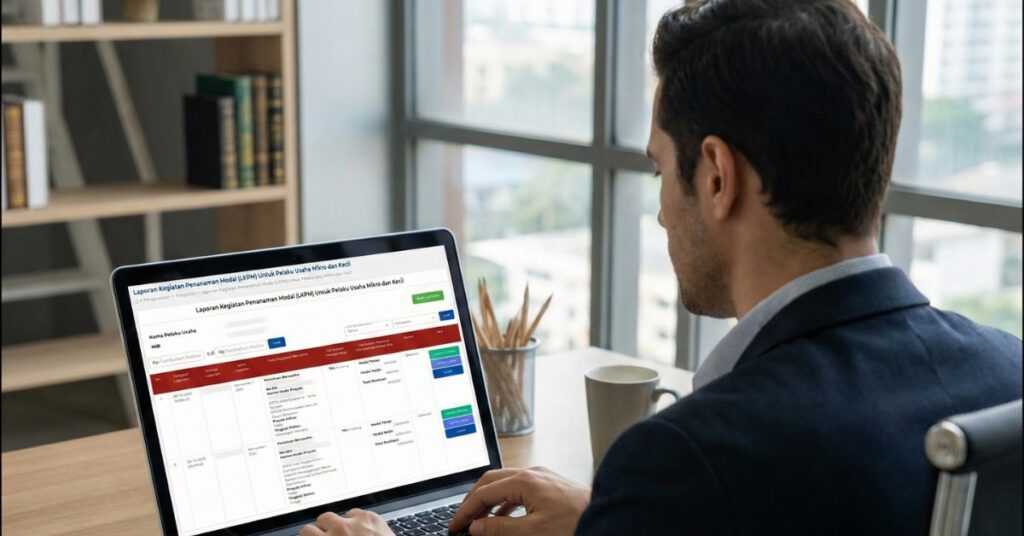
Indonesia asks certain businesses to send a regular update about what they’re actually doing: how much they’ve invested, what they’ve built, how many people they hired, and what problems they faced. That update is called LKPM (Laporan Kegiatan Penanaman Modal), it’s an investment activity report that you submit online through Online Single Submission (often shortened to the System OSS). In most cases, you’re reporting your investment activities oraz investment realization, meaning the real money spent and progress made, not just promises.
This is not the same thing as tax filings. Taxes focus on income and tax rules. LKPM focuses on your project progress, your investment value, and your operational reality.
Spis treści
Who is required to submit LKPM, and when?

Here’s the key rule: LKPM frequency depends on your business scale in OSS.
If OSS shows your business scale is “small.”
You report twice a year (Semester I and Semester II). The deadlines are:
- Semester I: must be submitted przez July 15 (same year)
- Semester II: must submit przez January 15 (the following year)
If OSS shows your business scale is “medium or large.”
You report every quarter (Triwulan). The deadlines are:
- Q1: January – March 10
- Q2: April – June 10
- Q3: July – September 10
- Q4: October – December 10
If the deadline falls on a national holiday, the reporting window can be adjusted by official notice.
For a PT PMA, don’t guess. Open OSS and check what it shows for your status and reporting schedule. Many spółki z kapitałem zagranicznym fall into the quarterly rhythm, but the system’s classification is what matters most.
Preparation stage vs operations stage: where your project is changes what you report
LKPM is also tied to where your project is in real life.
1) Preparation/construction stage
This is when you’re still building and setting up, your construction stage. You might be leasing land, doing nabywanie gruntów, buying equipment, or preparing a site. You may not have sales yet. You’re not in full commercial operations.
2) Operational and/or commercial stage
This is when you’ve started commercial operations, meaning you’re actively operating, selling, or delivering services.
In OSS, the operational/commercial LKPM is linked to a readiness statement. The regulation says LKPM for the operational/commercial stage is submitted after you fill in the “ready to operate/ready to be commercial” statement in OSS.
So if you’re still setting up, report like a project in progress. If you’re operating, report like an active business.
What you’re actually reporting in LKPM (the “what goes inside the report” part)
Twój lkpm report is meant to show real progress and real numbers. The system pulls some company info automatically from OSS (like your business identification number / NIB), but you still need to fill key fields.
Typical items include:
- Investment realization numbers for the period (what you spent this period)
- Total accumulated realization (what you’ve spent so far)
- Twój plan inwestycyjny (often pulled from OSS), compared to what you actually did
- Workforce updates, including employment data dla local and foreign employees / local and foreign workers, and sometimes pracownicy zagraniczni specifically
- Production and marketing info (some fields appear only at certain periods for some categories)
- A section for obstacles faced, this matters if your project is delayed or stuck
Why does this matter? Because your LKPM record can affect your overall investment compliance, your relationship with the Indonesian government, and how your company looks when you need approvals, expansions, or certain investment facilities or government incentives like tax incentives.
It also protects your business continuity. A clean reporting history improves your company’s credibility, especially when dealing with banks, partners, and audits.
Documents and data you should prepare before you click “submit”

You usually don’t upload a huge folder every time, but you robić need clean internal data so you can report fast and accurately.
- Twój business identification data: NIB and your company’s identification number references in OSS
- Your investment recap: spending for this period and total-to-date (investment value and fixed asset spend)
- Progress notes: what changed since last period (permits, site prep, equipment, hiring, etc.)
- Workforce totals: current and changes in headcount (local and foreign)
- Notes on delays and obstacles faced (supply issues, permit delays, site issues, budgeting, etc.)
- Basic license map: what approvals you have in OSS and what’s still pending (helpful for internal control)
How to submit LKPM reports in the OSS system (step-by-step, no drama)
This is the practical “how to submit lkpm” part. The LKPM guide shows a very straightforward flow:
- Make sure you have OSS access (username/password).
- Log in to OSS.
- Go to PELAPORAN → choose Laporan Kegiatan Penanaman Modal (LKPM).
- Kliknij BUAT LAPORAN.
- Pick the business activity/project you want to report.
- Review the project data, then fill in the realization section.
- Fill in workforce data (adds/reductions).
- Fill in production/marketing fields if they appear for your case.
- Fill in “problems faced” if needed.
- Add the person in charge, agree to the disclaimer, and click KIRIM LAPORAN.
After you submit, the system shows confirmation, and the report can be reviewed. If something is incomplete, you may see a status like “needs revision,” and you’ll update and re-send.
That’s the core of reporting lkpm. Do it calmly, and do it on schedule.
Common mistakes that trigger trouble (and how to avoid penalties)
Większość common mistakes are boring, but expensive if ignored:
- Picking the wrong reporting period (semester vs quarter) and realizing it after submission
- Reporting zero progress without explaining why (no story + no numbers = red flag)
- Forgetting to update workforce changes (especially if you have local and foreign staff)
- Not matching your investment breakdown to what you actually bought or built
- Waiting too long, then rushing and making errors (this hurts timely reporting oraz maintaining compliance)
If you want to avoid the usual LKPM headaches, you can use our LKPM Report service at visa-indonesia.com. Instead of just coaching you on what to enter, we handle the LKPM reporting for you end-to-end: we collect the required details, structure them the way OSS/BKPM expects, submit the report on schedule, and keep everything consistent across reporting periods, so you stay compliant without having to guess your way through the system.
What happens if you don’t comply: warnings, fines, suspension, and even revocation

This is the part that many inwestorzy zagraniczni learn too late. LKPM is a mandatory report. If you ignore it, the rulebook allows sankcje administracyjne.
The regulation explains a clear escalation path if a business doesn’t submit LKPM, including:
- First warning (peringatan pertama)
- Second warning
- Third warning
- Then, temporary suspension/suspension of business activities (the rule uses a “temporary stop” concept for business activity)
It can also include administrative fines, and if you still don’t fix it, the sanction can go further into license revocation, specifically revocation of the relevant business activity approval (pencabutan PB). That’s essentially revoking business permissions in OSS for that activity, and yes, this can include revocation evenafter repeated neglect and non-payment.
So when people say “LKPM is just paperwork,” that’s only true until it isn’t. Non-compliance can become a real operational risk.
Also, remember that LKPM obligations can overlap with other licensing requirements. For example, if your sector needs special permits or product registration, you don’t want a messy compliance record slowing everything down.
Why this matters to PT PMA founders
For PT PMA, LKPM is more than a form. It’s your proof of progress and good faith.
It supports:
- clearer zgodność z prawem oraz investment obligations
- smoother internal reporting for business development
- stronger standing in front of regulators like the Investment Coordinating Board (BKPM) under bkpm regulations
- easier continuity when your team changes (no “we don’t know what happened last quarter” problems)
If your PT PMA is still building, LKPM explains your construction timeline. If you’re already running, LKPM shows your operational progress and how your działalność gospodarcza are real.
A practical note for Bali-based PT PMA: Address readiness can help operations stay smooth
LKPM is filed online, but your company still needs a real, consistent base for documents and admin. If you’re setting up in Bali and need a compliant business address plus basic handling support, a wirtualne biuro can be a practical option, especially during early-stage setup, before committing to full fizyczna przestrzeń biurowa.
If you want details, you can check Visa Indonesia’s Virtual Office Bali service page for what’s included and how it supports office admin needs.
Final checklist (quick mindset)
LKPM isn’t scary. It’s a repeatable routine.
Know your deadline. Know your stage. Keep your numbers clean. Explain your obstacles. Submit on time. Ask for further assistance lub professional support when things get complicated, especially if your project has multiple locations, shifting headcount, or changing licenses.
Do that, and your PT PMA stays steady, credible, and ready to grow.
Gotowy do złożenia wniosku lub przedłużenia wizy?
Pozwól naszym specjalistom wizowym zająć się Twoją aplikacją.





 English
  Bahasa Indonesia
  Español
  Italiano
  Français
  日本語
日本語  Nederlands
  繁體中文
繁體中文  한국어
한국어  Norsk bokmål
  Svenska
  Dansk
Dansk  Türkçe
  Polski
  香港中文
香港中文  简体中文
简体中文  Українська
  Русский
  Bahasa Melayu