











Jak zatrzymać się na Bali na dłużej?

Bali is easy to love. The weather is warm, the food can be great, the people are kind, and the island has a vibrant culture that pulls many foreigners in fast. A short visit can turn into a big question almost overnight: how to stay in Bali long term without making a legal mistake, wasting money, or choosing the wrong visa.
So let’s keep this simple.
Jeśli chcesz stay in Bali beyond a holiday, you need to match your real plan to the right legal route. That might be a wiza turystyczna, a social and cultural visa-style visit route, a wiza jednokrotnego wjazdu, a multi-entry visa, a remote worker stay permit, a spouse-based permit, or an investor path linked to an Indonezyjska firma. Some people come for short stays and later want to stay longer. Others already know they want long-term living in Bali and need a more serious setup from day one.
Spis treści
The main legal ways to stay in Bali long-term
Bali makes long-term living look easy, but staying legally takes more than just booking a flight and extending a trip. The good news is that Indonesia offers several visa and stay permit options, and each one fits a different kind of traveler, remote worker, family setup, or long-term plan. Once you know what each path is actually for, it gets much easier to choose the one that makes sense for your life.
1. Visa on Arrival: good for a trial run, not a full move

For a lot of travelers, the Visa on Arrival is the easiest place to start. It works well for a short visit, a test stay, or a quick trip before making bigger plans. If you want to see what daily life in Bali actually feels like, this can be a simple first step.
In most cases, a VOA gives you 30 days in Indonesia. You can extend it once for another 30 days, which means your total stay is usually up to 60 days. After that, you cannot keep extending the same visa.
It is also not a long-term solution. You cannot turn it into another visa or temporary stay permit. So if you decide you want a different legal setup, you will usually need to leave Indonesia and apply again under the right visa for your real purpose. Another detail people often miss: the visa must be used within 90 days from the date it is issued.
2. Single-entry visit visas: better for a slower stay

Need more time than a VOA gives you? A longer single-entry visit visa may be a better fit. This is the category many people think of when they talk about a tourist visa or a social-cultural visa.
It works well for people who want to stay a few months without jumping straight into full residency. Maybe you want time to settle in, study some Bahasa Indonesia, explore different areas, and figure out whether Bali truly suits your lifestyle.
These single-entry visitor visas usually allow a stay of up to 60 days and can be extended. They are also more flexible than a VOA because they can be converted into another visa or stay permit later, depending on your situation.
To apply, you will usually need a passport with at least 6 months of validity, a recent passport photo, an outbound ticket, and proof that you can support yourself during your stay. That financial proof is often shown with a bank statement of at least USD 2,000, or the equivalent, for the last 3 months.
3. Multi-entry visas: useful if you travel often

If you expect to leave and re-enter Indonesia more than once, a multi-entry visa can make life much easier. This route makes sense for people with family in different countries, regional consultants, or anyone using Bali as one base among several.
The key thing to understand is this: the visa validity and the stay per visit are not the same. Many multi-entry visit visas on the official site are valid for 1 year or even 5 years, but each stay is commonly limited to 60 days per entry. So even if your visa lasts a long time, each individual visit still has its own limit.
At a minimum, you should expect to show a valid passport, proof that you can support yourself financially, and documents that match the reason for your visa. If you are entering for business meetings, for example, you may need paperwork tied to that activity. If the purpose is tourism or family visits, the focus is usually more on your travel plans and financial ability.
4. Remote worker visa: the route digital nomads look at most

If you work for a foreign company and get paid from outside Indonesia, this is the visa that gets the most attention. It is often called the digital nomad route, and for many remote workers, it makes far more sense than trying to stretch a visitor visa past its limits.
This is also one of the most popular visa types for people who want to live in Bali while keeping their overseas job.
To qualify, you need to show income of at least US$60,000 per year. You also cannot receive wages from a person or company in Indonesia. On top of that, official guidance says you are not allowed to sell goods or services in Indonesia.
If your setup matches those rules, this path is usually much cleaner and more logical than using a visitor visa for something it was never designed to do.
5. Spouse and dependent visas: a better fit for family life

If your reason for staying in Bali is tied to marriage or family, a spouse or dependent visa is usually the more stable option. It fits the reality of your situation better than bouncing from one visit visa to another.
These visas can allow a stay of up to 1 year or up to 2 years. They also let you leave and re-enter Indonesia as often as needed. Like several other visa types, they must be used within 90 days from the date they are issued. Once approved, you also receive an electronic limited stay permit and a re-entry permit when you arrive at immigration.
The document list is more detailed here. In general, you should prepare a passport with at least 6 months of validity, proof of living expenses of at least US$2,000 or the equivalent, a recent color photo, a CV, a travel itinerary, proof of guarantee from the sponsor or spouse, your marriage certificate or marriage book translated into Indonesian unless it is already in English, and proof that your spouse already holds a valid Indonesian stay permit or visa.
6. GCI: a major option for people with Indonesian roots or family ties
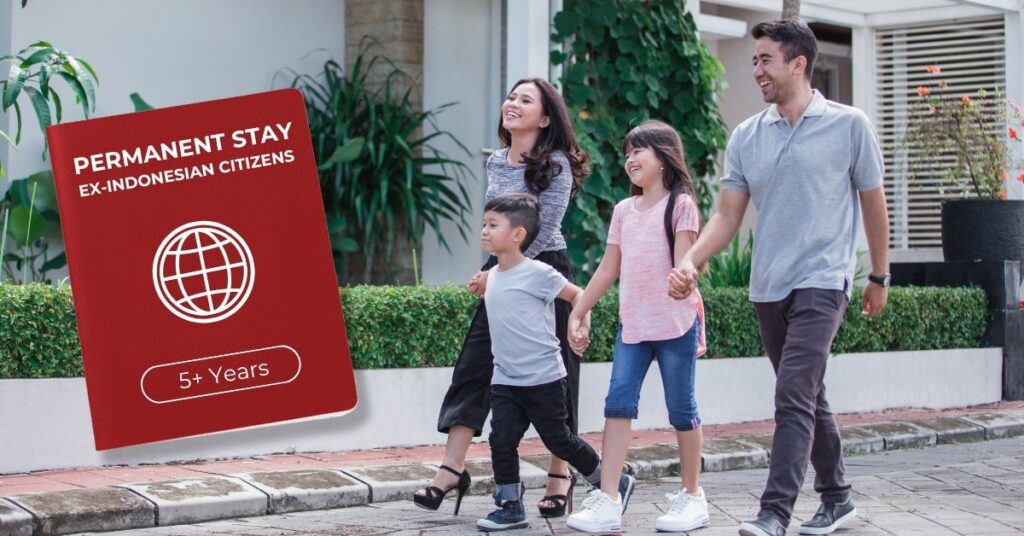
One of the biggest long-stay developments in Indonesia is the GCI permit, short for Global Citizen of Indonesia. It was launched in 2026 and is meant for people with a real family or historical connection to the country.
This includes ex-Indonesian citizens, descendants of ex-Indonesians up to the second degree, legal spouses of Indonesian citizens, children from mixed marriages, and certain family reunification cases.
What makes GCI stand out is that it is presented as an unlimited permanent-stay path. That is a big shift. Instead of dealing with a short permit you keep renewing, eligible people may have access to something much more lasting.
So if Bali is not just a destination for you, but part of your family story, this is a route worth looking at closely.
7. Investor and company-linked permits: for business, not casual stays

Jeśli chcesz invest in a company, become a director or commissioner, or take on a formal role in an Indonesian business, you are no longer in visitor-visa territory. This is where investor and company-linked permits come in.
In practice, many investor-style permits listed in the official system allow stays of up to 1 year or 2 years, and some company-linked categories can be extended. Still, not every business-related permit works the same way. The exact stay length, extension rules, and requirements depend on the category you apply under.
In general, expect to prepare a valid passport, proof of living expenses, a recent photo, a CV, a travel itinerary, and paperwork tied to your role in the company. Depending on the permit, that may include a company guarantee, employment approval, or a statement confirming your plan to establish or invest in a business in Indonesia.
This is also where people often ask about work permits. The simple answer is this: if you are doing formal work for a local company, a tourist-style visa is not the right option. You usually need the proper stay permit and the correct employment approval through the sponsoring business.
8. Second Home visa and similar routes: for a deeper long-term base
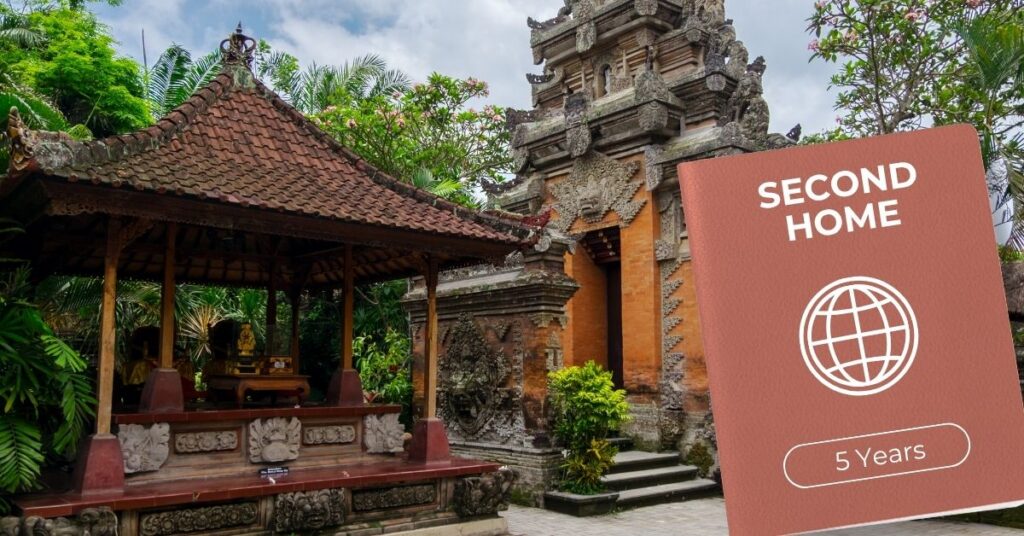
Some people are not looking for a short stay or a trial period. They want a real base in Indonesia. They want more stability, easier travel in and out, and a setup that supports a more settled life. That is where the Second Home visa and similar long-term options come in.
These are not casual entry routes. They usually come with heavier financial requirements and a more serious application process. But for the right person, they can be one of the strongest options available.
Right now, official Second Home routes are shown with stays of up to 5 years or even 10 years, and some can be extended. That makes them one of the longest legal stay paths available for foreigners in Indonesia.
What you need will depend on the specific category, but in general, you should expect to prepare a valid passport, a recent photo, proof that you are financially secure, and supporting documents that match the route you choose. Some Second Home categories may also ask for proof of a family relationship or a statement of commitment related to investment or company establishment.
What life in Bali is really like once the visa is sorted
Getting the wiza right is step one. After that, real life begins.
And real life in Bali is not just sunsets and smoothie bowls.
Yes, Bali offers beauty, surf, temples, rice fields, and a deep sense of atmosphere. But daily life here is shaped by traffic, weather, distance, neighborhood culture, and how well your routines match the island.
The first thing to think about is area. Canggu works for some expats, founders, and remote workers because there is a strong social scene, lots of cafés, and fast internet. Ubud works better for people who want a slower pace, more greenery, and a quieter rhythm. Sanur often suits families, older long-term residents, and people who want a calmer coast.
Your housing choice matters too. A villa with private pools may look perfect on a website, but that does not tell you about road noise, flood risk, mold, distance to groceries, or whether your wi fi drops every afternoon. Two rentals can cost the same amount, yet one gives you peace and the other gives you stress.
Your monthly expenses will also depend on your style. You can eat cheaply at local warungs or spend a lot at trendy spots. You can rent a room, a guesthouse, or a full villa. You can live simply, or build a high-comfort setup with coworking, gym, imported groceries, and frequent weekend trips.
The real koszt z living in Bali is not one number. It is your rent, transport, food, phone plan, social habits, insurance, and visa-related spending together. A person who cooks at home and rides a scooter will have a very different budget from someone who orders delivery, lives in a villa, and books flights often.
You should also think about the basics early. Pobierz local SIM. Check your bank access. Make sure your paszport has enough validity. Plan for ubezpieczenie zdrowotne, not just because it looks responsible on paper, but because medical issues abroad get expensive fast. A tropical island is still real life. People get sick. People crash scooters. People need tests, medicine, or urgent care.
And yes, you should learn some Bahasa Indonesia. Even a little helps. It shows respect, makes errands easier, and improves your connection to the place.
Respecting Bali means more than loving Bali
Jeśli chcesz stay in Bali beyond a short trip, respect matters.
This island is not just a content backdrop. It has culture, rules, rhythms, and deep local meaning. You are not moving into an empty paradise. You are entering someone else’s home.
That means paying attention to local customs, dressing appropriately in certain places, behaving respectfully at temples, and understanding that ceremonies can affect traffic, business hours, and the flow of daily life. The społeczność will notice how you act.
One reason some cudzoziemcy struggle in Bali is that they arrive with a consumer mindset. They love what the island gives them, but they do not adjust. They want convenience without patience, comfort without respect, and low prices without understanding the real economy around them.
Long-term success in Bali comes from a different attitude. Learn. Watch. Adapt. Respect the vibrant culture that makes the island special in the first place.
Common mistakes that ruin long-term plans
The first big mistake is choosing a visa by length, not by purpose. A person sees a route that lasts longer and assumes it must be better. That is not always true.
The second mistake is mixing up tourism, spotkania biznesowe, remote work, employment, and formal business activity. These sound close in casual conversation, but they are not the same in immigration terms.
The third mistake is waiting too long. People assume they can figure it out later, then suddenly their stay is close to ending, and they are rushing to renew, extend, or wyjechać z Indonezji. Once panic starts, bad decisions follow.
The fourth mistake is thinking a rental contract solves immigration. It does not. A villa lease and a legal stay permit are different things.
The fifth mistake is relying on random online advice from strangers, old forum threads, or vague social media clips. Always compare what you read with the official Indonezyjski rząd immigration system, the e-visa portal, and, when needed, a reliable professional.
If your details change, you may even need a new visa instead of trying to stretch the old one beyond its real purpose. Sometimes the smartest move is simple: finish your current period properly, wyjechać z Indonezji, and return with the right setup.
A simple step-by-step plan
If you feel overwhelmed, use this simple process.
- Decide whether this is a test stay or a real move.
- Match your activity to the right visa.
- Check whether you need a wiza jednokrotnego wjazdu lub multi entry visa.
- Make sure your paszport is valid long enough.
- Prepare proof of funds, job documents, sponsor details, or company papers if needed.
- Budget for rent, food, transport, ubezpieczenie zdrowotne, and visa costs.
- Choose your first area based on daily life, not just Instagram.
- Apply early enough that you are not rushing.
- Track your allowed stay period and any przedłużenie wizy deadline.
- If your real situation changes, check whether you need a zezwolenie na pobyt czasowy, a different permit, or a fresh application.
That is how you turn a dream into a stable plan.
Final thoughts on how to stay in Bali long-term
The best answer to how to stay in Bali long term is not one magic visa. It is the legal path that fits your actual purpose.
If you are just testing the island, start simple. If you want a slower visit, use a longer visit route. If you work for a spółka zagraniczna, look seriously at the remote worker path that many people call the wiza cyfrowego nomada. If your life is tied to a spouse, family, ex-Indonesian status, diaspora roots, or an Indonezyjska firma, choose the route that matches that reality. If you qualify for GCI, treat it as a serious top-tier option, not a side note. And if you want deeper roots through wealth or asset planning, look at the longer-term residence paths.
Bali can be an amazing place to live. The food is good, the people are warm, and the island has a kind of rhythm that many przyjaciele, founders, creators, and ekspaci fall in love with. But staying here well takes more than desire. It takes the right documents, a realistic budget, respect for culture, and a plan that is legal from the start.
Do that, and your Bali story has a much better chance of becoming a real life, not just a short escape.
And before you apply, remember one last thing: the smartest visa is not always the easiest one, the cheapest one, or the one everyone else on the internet talks about. It is the one that honestly fits your purpose.
Gotowy do złożenia wniosku lub przedłużenia wizy?
Pozwól naszym specjalistom wizowym zająć się Twoją aplikacją.




 English
  Bahasa Indonesia
  Español
  Italiano
  Français
  日本語
日本語  Nederlands
  繁體中文
繁體中文  한국어
한국어  Norsk bokmål
  Svenska
  Dansk
Dansk  Türkçe
  Polski
  香港中文
香港中文  简体中文
简体中文  Українська
  Русский
  Bahasa Melayu