








eSIM与实体SIM卡在巴厘岛的对比:哪种更适合你?

If you’re going to Bali, you’ll probably want mobile data. You’ll use it for essential apps like Google Maps, WhatsApp, Grab/Gojek, or checking your hotel booking, and figuring out where that café is when your driver drops you off one street too early. Staying connected and accessing internet services is crucial for a smooth Bali trip, whether for navigation, communication, or sharing your experiences online.
You have two main choices: an eSIM (also known as a digital SIM or embedded SIM) or a physical SIM card. Both can work great in Bali. But they’re not the same, and the “best” option depends on your phone, your travel style, and how long you’ll stay.
Here’s the goal of this guide: by the end, you’ll know exactly what to buy, when to set it up, and how to avoid the common mistakes that make people waste money (or lose signal right when they need it).
Quick answer (the TL;DR)
If you want the easiest option and your phone supports eSIM, choose an eSIM and set it up before you fly. You can land, turn on data, and move on with your day. Before you buy anything, double-check that your device is phone eSIM compatible (meaning it supports eSIM).
If you want the best value and you don’t mind a little setup, like registering IMEI, a local physical SIM can be cheaper for more data, especially if you’re staying longer than 3 months.
If you want a local phone number but you also want the “no SIM swapping” convenience, look into a local tourist eSIM option (where available).
Now let’s slow down and make this really clear. One more note: some travelers prefer unlimited data so they never have to think about caps. If that’s you, compare unlimited data plans carefully, especially hotspot rules and fair‑use limits.
目录
Decide in 60 seconds (a simple way to choose)
Imagine you’re standing in the Bali airport after a long flight. Your phone is at 23%. You want Wi‑Fi, but the public network is slow. You need data right now.
Ask yourself these four questions:
1) Does your phone support eSIM?
If yes, eSIM is a strong choice. eSIMs can be activated instantly by scanning a QR code, so you get mobile internet access without swapping physical cards. You also have the flexibility to switch between different networks or providers on your device, which is convenient for travelers. If no, you’ll need a physical SIM.
2) Do you want the internet working before you even land?
If yes, go eSIM. You can set it up at home on Wi‑Fi.
3) Do you need an Indonesian phone number?
If yes, a local physical SIM is often the simplest. Some local tourist eSIM options may also include a local number, depending on the provider.
4) How long are you staying?
If you’re staying a few days, convenience matters more than tiny price differences. If you’re staying weeks, value and top-ups matter more.
That’s the whole decision tree. Everything else is just details.
First, don’t mix these up: there are three “SIM” options in Bali
A big reason people get confused is that “eSIM” can mean different things.
There are three main options for mobile connectivity in Bali:
- Physical SIM Card: This is the traditional SIM card, also referred to as a physical card, that you insert into your phone. It requires physically swapping or inserting the card into your device, which has been the standard method for years.
- eSIM: This is a digital SIM that allows you to activate a cellular plan without having to use a physical card. eSIMs are convenient because you can set them up instantly by scanning a QR code, and there’s no need to handle or swap out a traditional SIM card.
- Roaming: Using your home country’s SIM card (physical or eSIM) and paying international roaming fees.
1) Travel eSIM (international data plans)
This is the most common eSIM that travelers buy online. It’s usually a data plan you install by scanning a QR code or using an app. It’s designed to be fast and simple.
A big reason people love travel eSIMs is speed: many offer instant activation (or close to it) and flexible plans for different trip lengths and data needs. It’s designed to be fast and simple.
2) Local tourist eSIM (from a local operator)
This is an eSIM product offered by a local Indonesian provider for tourists. It can feel more “local,” and it may come with local-style benefits.
Availability and rules can change, so treat this as: “check what’s currently offered.”
3) Local physical SIM card (the classic plastic SIM)
This is the small chip you put into your phone. You buy it at the airport, in shops, or at official outlets. It’s popular because it can be a good deal for longer stays, and you usually get an Indonesian number.
Now that we’ve separated these, comparing eSIM vs physical SIM becomes much easier.
eSIM vs physical SIM in Bali (the real comparison)
Let’s compare them like a normal person, not like a confusing tech blog.
| 特点 | eSIM (Embedded SIM) | Physical SIM (Traditional SIM Card) |
| Setup Speed | Can be set up before the trip, ready upon landing. | Must be purchased and activated after arrival. |
| 便利性 | High. No need to open SIM tray; no risk of losing home SIM; switch plans easily. | Lower. Requires physical handling (inserting/removing). |
| Price & Value | Often more expensive, less data for the money (especially for longer stays). | Often wins on value, local plans offer more data for the money. |
| Local Number | Many travel eSIMs do not provide a local number. | Usually provides a local number (for calls, texts, OTPs). |
| Extending/Top-ups | Depends on the provider’s app or website. | Easy to top up at local stores and kiosks. |
| Device Compatibility | Only works on phones that support eSIM. | Works on almost any unlocked phone. |
| Dual SIM Use | It can often be used alongside a physical SIM (or another eSIM) to keep the home SIM active for SMS (if the phone supports dual SIM). | It can often be used alongside an eSIM to keep the home SIM active for SMS (if the phone supports dual SIM). |
Some travelers want to keep their home line as the primary sim for SMS (like bank verification) while using a Bali data plan for internet. If your phone supports dual SIM (one eSIM + one physical SIM, or two eSIMs), you can often do both.
eSIM in Bali: pros, cons, and who it’s perfect for
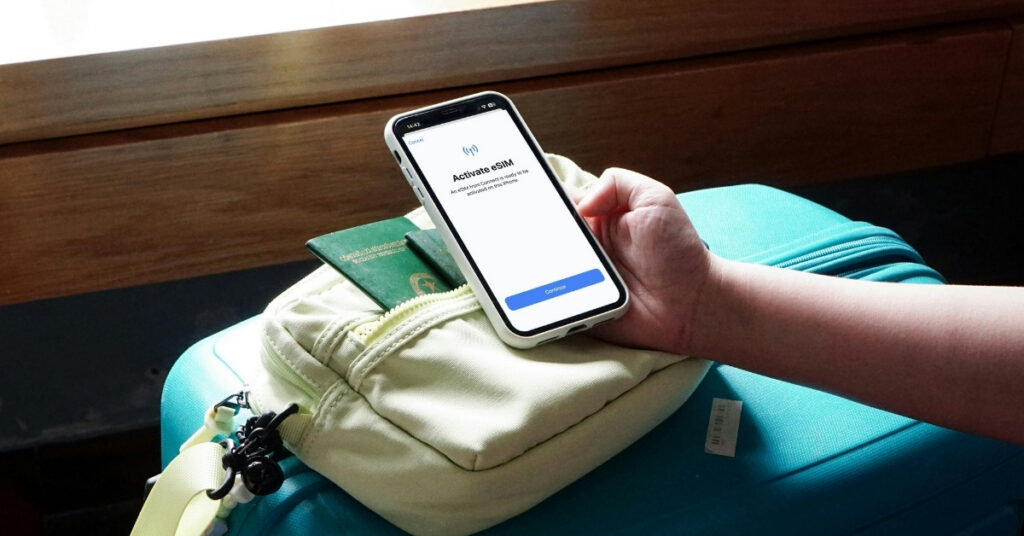
Why do people love eSIM
The biggest reason is simple: no hassle.
You can set it up while sitting on your couch, using your home Wi‑Fi. Then, when you land in Bali, you turn it on, and you have data. No line at the airport. No awkward conversation at a booth when you’re tired and sweaty. No “Wait, why is my phone saying ‘No Service’?” moment.
eSIM is also great if you want to keep your home SIM inside your phone. That means your WhatsApp number stays the same, and you can still receive SMS or calls on your normal line (depending on your phone settings and roaming plan).
The downsides of eSIM
First, your phone must support it.
Second, many travel eSIMs are data-only. That’s totally fine if you rely on WhatsApp, FaceTime, Telegram, Instagram calls, or Zoom. But if you truly need a local Indonesian phone number for something, you should check the plan details carefully.
Third, you need to install it correctly. If you lose your QR code or you delete the eSIM by mistake, it can be annoying. It’s not hard, but you do need to pay attention.
Who should choose eSIM in Bali
Choose eSIM if:
You’re staying a short time, you want it easy, you arrive late at night, you don’t want to shop for a SIM, or you just want to land with internet already working.
If that sounds like you, eSIM is your friend.
Physical SIM in Bali: pros, cons, and who it’s best for
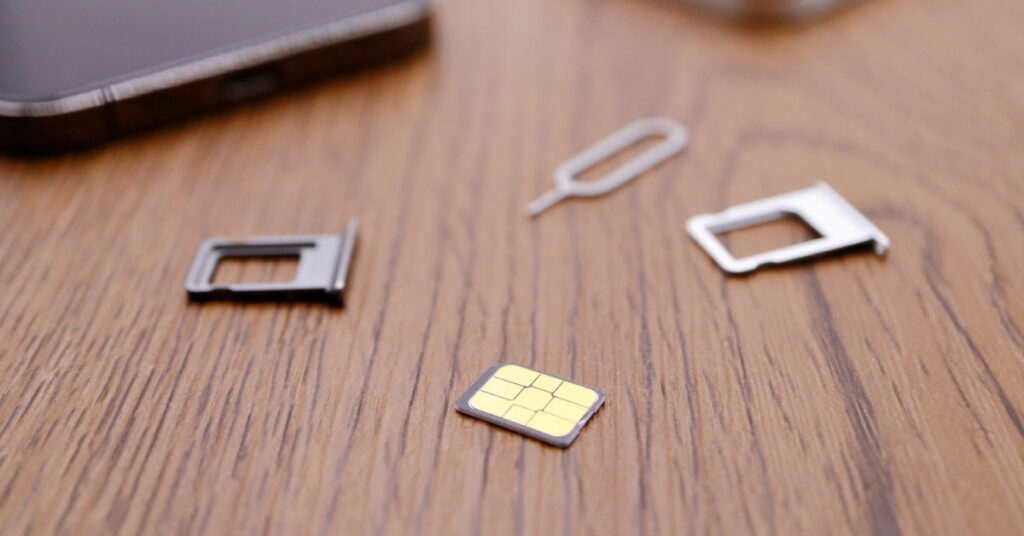
Why do people still love physical SIM
A physical SIM is simple and reliable. In Bali, many travelers buy prepaid sim cards at the airport or in town, then pop the SIM in and go. It works on almost every unlocked phone, including older models that don’t support eSIM.
Local physical SIM plans can also be a strong deal if you stay longer than a week or two. They often make it easier to top up data, extend your plan, and keep using the same number if you come back.
The downsides of physical SIM
The main downside is timing. You can’t really set it up before you arrive. You usually have to buy it in Bali, which can mean waiting in line at the airport or finding a shop in town.
Also, you have to physically swap SIM cards. If you’re not careful, you can lose your home SIM. This happens more than you think. People put it in a pocket, forget it, and later it disappears into the universe.
Who should choose a physical SIM in Bali
Choose a physical SIM if:
You’re staying longer, you want the best value, you need a local number, or your phone doesn’t support eSIM.
Where to buy and set up: airport vs city vs before you fly
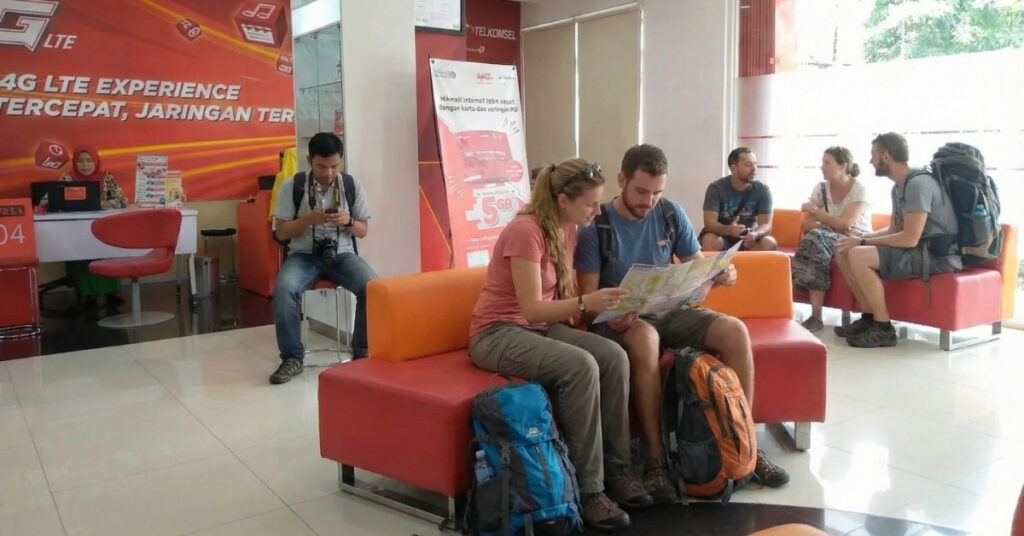
This section matters because your first day in Bali can either feel smooth… or stressful.
Fortunately, getting connected is easy. Mobile phone shops, airport kiosks, and convenience stores all sell SIM cards in Bali, making it simple for travelers to get set up quickly.
If you want instant connectivity, head to Ngurah Rai International Airport (also known as Rai International Airport) upon arrival. Kiosks for major providers like Telkomsel and XL Axiata are conveniently located in the arrivals area, so you can pick up a prepaid SIM card as soon as you land. Airport kiosks and convenience stores at the airport also sell SIM cards, often with staff who can help set up your phone on the spot.
For even more convenience, some services offer to have your SIM card delivered directly to your hotel in Bali, so you can skip the lines and start your trip hassle-free.
If you prefer to buy in town, mobile phone shops and small convenience stores in tourist areas also sell SIM cards. While street vendors may offer SIM cards as well, it’s best to use official outlets to ensure your SIM is properly registered and you get the data package you expect.
Option A: Set up a travel eSIM before you fly (the smoothest start)
If you go with a travel eSIM, do it before your trip. There are multiple eSIM providers offering plans for Bali, and you can activate your eSIM before arriving for instant connectivity as soon as you land. Here’s the simple way:
First, make sure your phone is unlocked. If it’s locked to a carrier, most eSIM plans won’t work.
Second, check that your phone supports eSIM. Newer iPhones and many newer Android phones do, but not all.
Third, install the eSIM while you have strong Wi‑Fi. Most providers give you a QR code or an app setup.
Finally, don’t turn it on too early if the plan starts counting days right away. Some plans start when you connect to a network in Bali, but others start immediately after installation. Read the plan rules.
If you do those steps, your Bali arrival is basically: airplane mode off, data on, go.
Option B: Buy a local tourist eSIM in Bali (if available)
A local tourist eSIM is a middle path. It can feel local, but it still gives you the convenience of eSIM. Tourist SIM cards are also widely available in Bali, tailored for short-term visitors and easy to obtain.
Services like BaliEasy and Balisim offer both eSIMs and physical SIMs with free delivery to hotels in popular tourist hotspots such as Canggu and Seminyak.
Because availability and requirements can change, the best approach is this:
Check the official local operator info before you travel or right when you arrive. If they list official stores and airport counters, use those. Official locations are usually safer than random street sellers.
Option C: Buy a physical SIM in Bali (airport booth or official store)
If you buy at the airport, you’ll see booths and counters after you land. They can help you activate the SIM. This is fast and convenient, but prices are usually a bit pricier than in town. The convenience and immediate connectivity may justify the extra cost, especially if you want to use local services like ride-hailing apps or food delivery right away.
If you buy in town, you can often find official outlets or phone shops. Whenever possible, go to official provider stores (or clearly branded counters) because they’re less likely to cut corners on activation and registration. Both airport and city shops offer various internet packages for tourists, with different data allowances and easy activation processes to enhance your connectivity during your stay.
Documents you may need for a SIM or eSIM in Bali
In many cases, getting a local SIM means the seller will ask for identification details because the Indonesian government requires SIM registration. To buy a SIM card in Bali, you’ll just need your passport for registration, as mandated by the Indonesian government.
Here are the common documents or information you may be asked for:
- 您的护照
- Basic personal details (name, date of birth, nationality)
- Your phone’s IMEI number (sometimes requested, especially for certain registrations)
The exact process can vary by provider and by where you buy it. The important thing is: bring your passport and be ready for a short registration step.
Indonesia IMEI reality check (simple, not scary)
You might have heard people talk about “IMEI blocking” in Indonesia. That sounds intense, but let’s keep it simple.
Your IMEI is basically your phone’s unique ID. Indonesia has rules that can affect long-term use of foreign phones on local networks, and this is where IMEI registration comes in.
Here’s the practical way to think about it:
If you’re in Bali for a short vacation, you’re usually focused on getting a plan that works today. Most tourists don’t want to do extra paperwork on day one. With eSIMs, you don’t need to worry about IMEI registration with the Indonesian government, making them more convenient for short-term travelers. Physical SIM cards, on the other hand, may require IMEI registration if you plan to use your phone for an extended period.
If you’re staying for a longer time, like months, then IMEI rules can matter more. Some travelers choose to register, or they plan their phone and SIM choices around how long they will stay.
This guide isn’t legal advice. The key message is: short stays are usually easier. Long stays require more planning.
If you’re staying long-term, it’s smart to read an IMEI-specific guide so you don’t get surprised later.
Coverage in Bali: what to expect in real life
Bali is a small island, but your experience can still change depending on where you go. Fast internet is essential for staying connected, whether you’re working remotely, navigating, or sharing your travels. Telkomsel, Indonesia’s largest mobile network provider, offers the best coverage and the widest network in Bali, making it the top choice for reliable and fast internet.
In busy tourist areas like Canggu, Seminyak, Kuta, Ubud, and Uluwatu, you’ll usually have decent service with a solid provider. XL Axiata and Indosat are also popular options among travelers, offering competitive prices and reliable coverage. Indosat, in particular, is known for its affordable data plans, making it a favorite for budget-conscious visitors. You’ll still see slow spots sometimes, especially in crowded places or during peak hours.
If you travel to smaller villages, mountain areas, or go island-hopping, coverage can get weaker. That doesn’t mean “no signal,” but it can mean slower data and occasional dropouts.
So here’s the advice that saves headaches:
If you plan to explore a lot, don’t choose your plan based only on the cheapest option. Choose a plan that’s known for reliability.
How much data do you need in Bali?
Before you pick a plan, think about your typical data usage, especially if you stream video, upload lots of content, or share a hotspot.
Think in three levels.
If you’re a light user, you mostly use Google Maps, WhatsApp, and quick searches. You’re not watching a lot of video. You might upload a few photos.
If you’re a medium user, you post on Instagram, watch some short videos, and you use data throughout the day. This is the most common traveler type.
If you’re a heavy user, you stream video, do video calls, upload lots of content, or share your hotspot with a laptop. For heavy users, unlimited plans are available from some eSIM providers like Holafly, which can be a good option if you want hassle-free, comprehensive connectivity without data caps.
Here’s a simple way to estimate:
If you’re light, a smaller plan can work for a week. If you’re medium, you’ll want more breathing room. If you’re heavy, don’t gamble, get a plan that matches your habits, especially if you’ll work remotely. Also, note that local prepaid plans from providers like Telkomsel and XL Axiata are often cheaper and can offer high data volumes in Bali.
Also, remember: hotels often have Wi‑Fi. If you spend nights uploading your content on Wi‑Fi, you’ll use less mobile data.
Best picks by traveler type (clear recommendations)
Let’s match choices to real people.
Choosing the right SIM card in Bali depends on your phone’s eSIM compatibility and your travel needs. If your phone is eSIM compatible, you can activate a digital plan before you arrive or instantly upon landing. For those with phones that do not support eSIM, purchasing a physical SIM card in Bali is easy, available at the airport, convenience stores, or delivered to your hotel. Having a local SIM card in Bali ensures reliable internet access throughout your trip.
Budget-conscious travelers should consider Indosat Ooredoo (IM3), which provides low-cost, high-data plans ideal for staying connected without overspending.
If you’re staying 3–5 days
Choose convenience. This is where eSIM shines. You don’t want to waste your short trip standing in lines or hunting for a shop.
If you’re staying 7–14 days
Both options can be great. If you want it easy, use eSIM. If you want more value and maybe a local number, consider a physical SIM.
If you’re staying 30 days or more
Think long-term. You’ll care more about top-ups, extending your plan, and having stable service. A local physical SIM often makes sense here. A local tourist eSIM may also work if it supports easy extensions.
If you’re working remotely
Don’t choose the cheapest plan. Choose stability. And check hotspot rules if you plan to share data to a laptop.
If you need a local number for OTP or local calls
A physical SIM is usually the easiest path. If you’re choosing an eSIM, confirm that it includes a local number, not just data.
Visa + Connectivity: add a Bali eSIM while you arrange your visa
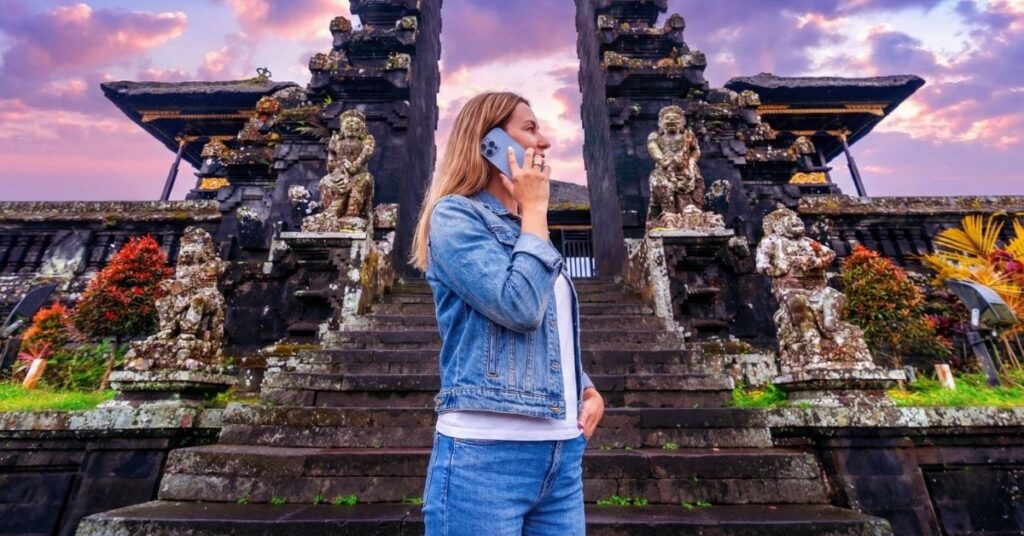
When you land, you might need to show your booking, message your driver, access your email, confirm your hotel check-in time, or pull up your e‑VOA details. And sometimes airport Wi‑Fi is slow, crowded, or inconvenient.
That’s why it’s smart to set up the internet 之前 your trip, right alongside your visa planning.
If you’re already checking your 签证选择 关于 Visa-Indonesia.com, this is the perfect time to handle both needs in one flow. You can get your eSIM plan while checking out your visa in one go.
But you don’t have to bundle it. If you have managed your Indonesia visa, you can also check out the Bali eSIM plans individually. Review the available eSIM plans below and select the one that best suits the duration of your trip and your data usage needs.
Here are the most popular options:
| Bali eSIM Plan | Data | 有效性 | 最适合 | |
| eSIM 印度尼西亚和巴厘岛 5 GB / 30 天 | 5 GB | 30 天 | Light use (maps, messaging, quick browsing) | View plan |
| eSIM 印度尼西亚和巴厘岛 15 GB / 30 天 | 15 GB | 30 天 | Normal travel use (IG, daily browsing, ride apps) | View plan |
| eSIM 印度尼西亚和巴厘岛 30 GB / 30 天 | 30 GB | 30 天 | Heavy use (lots of uploads, reels, frequent hotspot) | View plan |
| eSIM 印度尼西亚和巴厘岛 50 GB / 30 天 | 50 GB | 30 天 | Power user / remote work month (work calls + hotspot) | View plan |
| eSIM 印度尼西亚和巴厘岛 50 GB / 90 天 | 50 GB | 90 天 | Longer stays (spread data across 2–3 months) | View plan |
If you want a clean arrival experience, doing it this way is one of the easiest wins.
Common mistakes (and how to avoid them)
Most Bali SIM problems come from a few predictable mistakes.
The first is buying a plan without checking if your phone supports eSIM. People assume every phone does. It doesn’t.
The second is choosing a plan that’s data-only when they need a local number for something specific. If you only need WhatsApp, data-only is fine. But if you need local SMS or calls, check that before you buy.
The third is installing an eSIM and then accidentally deleting it while “cleaning up” their phone settings. If you delete it, you might not be able to reinstall it easily. Treat your eSIM like a ticket. Don’t throw it away.
The fourth is paying a high airport price without realizing there are other options in the city. Sometimes paying more is worth it for convenience. But at least make it a choice, not an accident.
FAQs (quick answers, no fluff)
Will my WhatsApp number change if I use an eSIM in Bali?
Usually, no. WhatsApp is tied to the phone number you registered with, not the SIM you use on vacation. If you keep your home number active or you don’t re-register WhatsApp, you’ll keep the same WhatsApp identity.
Can I use my home SIM and a Bali eSIM at the same time?
Often, yes, if your phone supports dual SIM features. Many phones let you keep your home SIM for calls and texts while using the eSIM for data. You may need to choose which line is used for mobile data in your device settings.
Do I need my passport to buy a SIM in Bali?
Very often, yes. SIM registration rules exist, and shops typically ask for passport info for foreigners.
Should I buy at the airport or in the city?
If you want it fast and simple, the airport can be worth it. If you want better prices or you want to compare options calmly, buying in the city can be better. There isn’t one “correct” answer. The best answer is the one that matches your priorities.
What if I’m visiting for just a few days?
Then prioritize convenience. A travel eSIM set up before you fly is hard to beat.
What if my phone doesn’t support eSIM?
No problem. Get a physical SIM. Bali is still very friendly to physical SIM users.
Is free Wi-Fi or public Wi-Fi available in Bali?
Yes, free Wi-Fi is widely available in hotels, restaurants, and cafes across Bali. However, public Wi-Fi may not always be reliable or fast, and using it can expose you to security risks. For a safer and more consistent internet, using a local SIM card or eSIM is recommended.
Can I rent pocket Wi-Fi in Bali?
Yes, pocket Wi-Fi rentals are available for tourists in Bali. These devices provide a personal, secure Wi-Fi network for your devices. Keep in mind that renting a pocket Wi-Fi can be expensive, and you’ll need to ensure the device is charged to use it throughout the day.
A simple final recommendation (so you can stop thinking about it)
If you want the easiest Bali internet plan, and your phone supports eSIM, set up a travel eSIM before you fly.
If you want a local number and a strong value plan, especially for longer stays, get a local physical SIM.
If you’re already planning your Indonesia visa, it’s smart to handle your connectivity at the same time. Having internet ready on arrival makes everything smoother, from transport to bookings to messaging.
Bali is more fun when your phone works.
And now you know exactly how to make that happen.





 English
  Bahasa Indonesia
  Español
  Italiano
  Français
  日本語
日本語  Nederlands
  繁體中文
繁體中文  한국어
한국어  Norsk bokmål
  Svenska
  Dansk
Dansk  Türkçe
  Polski
  香港中文
香港中文  简体中文
简体中文  Українська
  Русский
  Bahasa Melayu