











발리에서 여권을 분실했을 때 해야 할 일
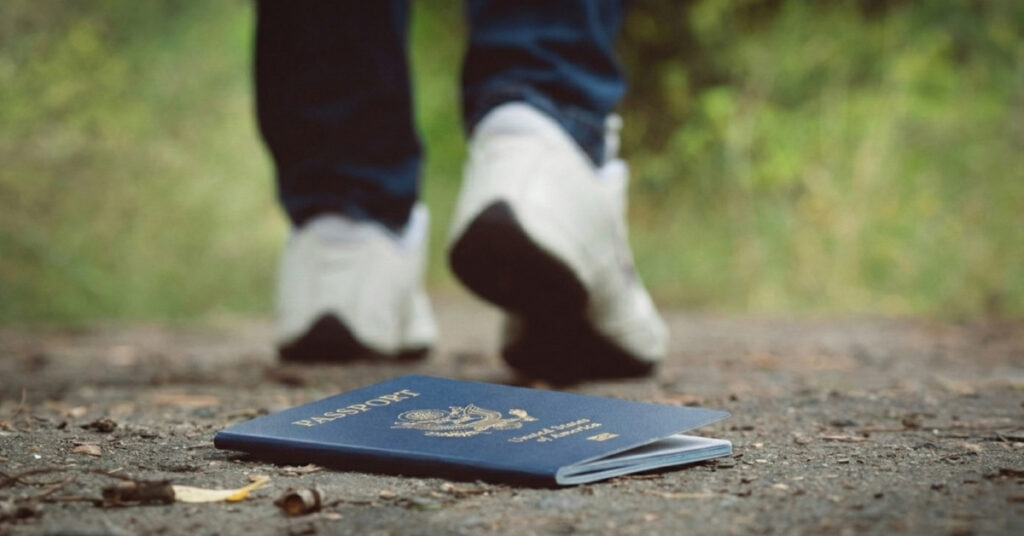
Lost a passport in Bali is stressful, but it’s fixable. Thousands of people go through this every year. There’s a clear path forward, and this guide walks you through every single step.
Each step unlocks the next one. Contacting your country’s embassy or consulate immediately after reporting the loss to the police is crucial for all nationalities. This step is essential to minimize disruptions to your travel plans and to start the process of returning to your home nation with proper documentation.
In some cases, you may need to bring family members or representatives to your country’s embassy to help verify your identity or assist with the emergency passport application process. Miss a step, and you’ll hit delays.
빠른 고지 사항: this is practical information based on what actually happens in Indonesia and official advice from consulates. It’s not formal legal advice. When in doubt, contact your embassy and immigration directly. Australians should contact the Australian Consulate-General in Bali for specific assistance.
60-Second Action Checklist (What To Do Right Now)
Don’t worry, losing a passport in Bali is more common than you think, and there are clear steps to minimize disruptions to your travel plans and daily life.
Whenever possible, store your passport and other valuables in the hotel safe when not in use. Avoid carrying your passport while walking around; a copy is usually sufficient for most situations.
First, retrace your steps. Check your accommodation, safe, drawers, laundry pile, bathroom counter, under the bed, and all your bags. Think about everywhere you went today. That yoga studio, the coworking space, the café, the beach club, your scooter seat, the taxi. Check ride-app lost-and-found sections.
Second, lock down your other valuables. Secure your bank cards, phone, laptop, and cloud accounts. If your whole bag is gone, act fast.
팁: Stay aware of your surroundings to prevent losing your passport in the first place.
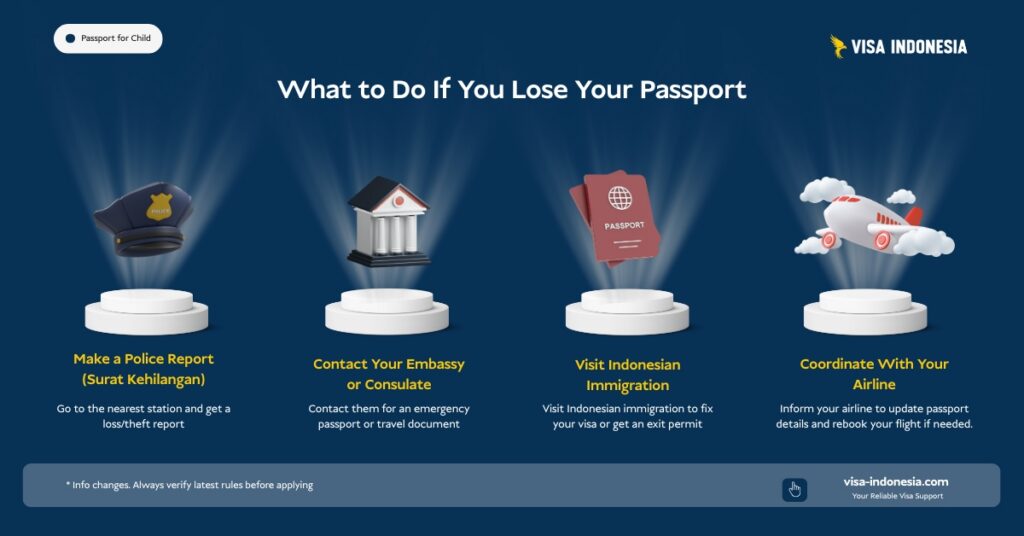
If it’s still missing, here’s your sequence:
- Police station. Visit the nearest police station and file a loss or theft report. You need this document for everything that comes next.
- Your embassy or consulate. Contact them for emergency passport or travel document instructions. They’ll explain what to bring and when to come in.
- Immigration. Once you obtain a replacement document, visit the Indonesian immigration office to sort out your visa or get an 종료 허가.
- Airline. Talk to your airline to update your passport details or rebook your flight.
When you need urgent help right now:
- Your flight leaves in 24–48 hours
- Your visa is about to expire, and you risk overstaying
- You have a KITAS, KITAP, or complex immigration status
In these cases, consider getting a professional visa or legal support immediately. Time matters.
What to Do If You Lose Your Passport
Step 1 – Stop, Breathe, and Triple-Check
Before you start calling embassies and running to police stations, do a systematic search. You’d be surprised how often passports turn up in weird places.
Check your accommodation thoroughly:
- Hotel safe or villa lockbox
- All drawers, even ones you don’t usually use
- Laundry basket and bathroom counter
- Under the bed and inside pillow cases
- Every pocket of every bag, including side pockets
- Between books, under papers, in that random pile of receipts
Think about everywhere you went in the last 24 hours. That gym, coworking space, café, bar, or beach club. Call them. Many places have lost-and-found boxes.
Ask your hotel, villa, or hostel to help:
- Check with reception and their safe deposit area
- Talk to housekeeping, they find things while cleaning
- Look in their lost-and-found storage
If you find it, you can downgrade from panic to relief. Pour yourself a drink and make better backup plans (we’ll cover those later). If you still can’t find it after a thorough search, it’s time to move to the next step.
Step 2 – Secure Your Money, Identity & Devices
If your wallet or bag is gone too, block or freeze your bank cards immediately. Don’t wait. Call your bank or use your banking app.
If your phone or laptop is missing, log out of your key accounts remotely. Change passwords for your email, cloud storage, banking apps, and anywhere you store document scans or personal information.
Make a quick list of exactly what’s gone:
- Just the passport?
- Passport, plus wallet and cards?
- Whole bag with passport, phone, laptop, everything?
This list helps when you talk to the police, your embassy, and your insurance company. The more specific you are, the better.
Step 3 – Make a Police Report (Surat Kehilangan)
This step is non-negotiable. Your embassy won’t issue a replacement passport without a police report. Immigration won’t help you without it either. No police report means you’re stuck.
Where to go: Find the nearest police station, either a Polsek (local sector police station) or Polres (district police station). Your hotel can point you in the right direction, or check Google Maps.
What to bring if you have them:
- Any ID you still have (national ID card, driver’s license, anything with your photo and name)
- A photocopy or phone photo of your passport bio page (if you made backups, gold star if you did)
- Your local Bali address and phone number
- A basic timeline: when and where you think you lost it or it was stolen
What happens at the station: You’ll wait in a queue. An officer will ask you questions. You’ll file forms. The whole process can take an hour or more, sometimes longer if it’s busy or if you need a translator.
The officer will give you a certified copy of the loss report. This is your golden ticket. Keep it safe. Make photocopies. Take a photo of it. You’ll need to prove you filed a report multiple times over the next few days.
Step 4 – Contact Your Embassy or Consulate
Now you need to reach out to your country’s embassy or consulate, as they are the authorities that can help you return to your home nation and provide guidance in case of a lost passport in Bali. Most embassies and consulates for foreign nationals are located in Jakarta, not Bali, so you may need to coordinate with their Jakarta office even if there is an honorary consulate in Bali. Check which office handles passport issues for Bali.
Information they’ll usually request:
- Your full name, date of birth, and nationality
- Your passport number, if you know it (check old emails, backup photos, or travel booking confirmations)
- Details from your police report
- How your passport was lost or stolen
- Your travel plans and any urgent flights coming up
Required documents for an emergency passport or travel document:
- Police report (original or certified copy)
- Passport photos (usually two, sometimes more, check with your consulate first)
- Any remaining ID or photocopies of your old passport if you have them
- Fees (they might accept Indonesian Rupiah or your home currency, ask ahead)
- In some cases, you may need to bring people, such as family members or representatives from your home nation, to help verify your identity or assist with the passport application process.
Set your expectations right. Consulates have office hours. Many require an appointment. Public holidays in Indonesia or your home country will delay things. Processing times vary. Some consulates can issue emergency documents quickly. Others need to route everything through Jakarta or even back to their home country.
Check their website for current hours, appointment systems, and processing times. Don’t assume they’re open on weekends or that walk-ins are okay.
Step 5 – Emergency Passport vs Full Replacement
There are two types of new documents your consulate might give you: an emergency travel document or a full validity passport. They’re different, and which one you get depends on your situation.
Emergency passport or temporary travel document: This is a short-term document designed to get you home or to a limited set of destinations. It’s not a full passport. It usually has restricted validity, maybe just a few weeks or months. Some countries only let you use it to fly directly home.
When you’ll probably get an emergency document instead of a full passport:
- You need to travel urgently (like your flight is in a few days)
- Your consulate in Bali can’t print full passports on-site
- You’re under time pressure and can’t wait for a full replacement
Typical processing times (these are examples, not guarantees):
- Emergency document: Often, a couple of working days if your identity is readily confirmed and your paperwork is in order
- Full replacement passport: Often one to two weeks or more, sometimes longer if the passport needs to be printed in Jakarta or shipped from your home country
Critical warning: Emergency travel documents usually come with strings attached. You might be required to travel directly home. You can’t use them to hop around Southeast Asia or extend your Bali stay indefinitely. Read the restrictions carefully.
Step 6 – Dealing With Indonesian Immigration
Here’s something that confuses people: your embassy and Indonesian immigration are completely separate systems. Your embassy gives you a new passport. But immigration still needs to connect that new passport to your visa or give you permission to leave Indonesia.
Common outcomes:
Exit permit tied to your new passport. If you’re just trying to get home, immigration can issue an exit permit that lets you leave Indonesia legally with your new document.
Visa transfer if you’re staying longer. If you’re on a 관광 비자, KITAS, KITAP, or any other longer-term permit, immigration can transfer your existing visa to your new passport. This way, you don’t lose the time you’ve already paid for.
Practical tips for immigration visits:
Go early in the morning. Immigration offices get crowded, and you want to be near the front of the queue. Dress neatly; business casual is smart. Bring printed copies of everything: your new passport, your police report, your old passport copy if you have it, and your visa documentation. Bring digital backups on your phone, too.
If you have a sponsor, an employer, a school, or a visa agent, explain what’s happening immediately. They may need to come with you or submit paperwork on your behalf.
One important note: this immigration step is what protects you from accidentally overstaying while you’re sorting everything out. We’ll talk more about overstay risks later, but for now, just know that keeping local authorities informed is your safety net.
Step 7 – Coordinate With Your Airline
Airlines won’t let you board without a valid passport or travel document and proper immigration clearance. That’s international law, not just an airline being difficult.
What to discuss with your airline:
- Changing your flight date. If you can’t get your documents sorted in time, you’ll need to rebook.
- Updating your passport number and document type. Your new passport or emergency document has a different number from your old one. The airline needs to update its system.
- Extra check-in time. Traveling on an emergency document sometimes requires additional verification at check-in. Plan to arrive at the airport earlier than usual.
What to expect with tickets: Non-refundable tickets are tricky. Some airlines charge change fees. Some won’t. It depends on your ticket type and the airline’s policies. If you have travel insurance, check if it covers these costs.
Tight connections can be a problem, too. If your emergency document has routing restrictions, you might not be able to take connecting flights through certain countries. Emergency travel documents are typically valid only for direct return home, so confirm your entire journey is allowed.
Traveling Without a Passport – What’s Possible, What’s Not, and How to Manage

To leave Indonesia or continue your trip, you must get an emergency travel document (often called an “Emergency Passport”) or temporary travel authorization from your country’s embassy or consulate. These emergency documents are not fully valid passports.
They are usually issued for a limited time and may only authorize you to travel directly back to your home country or to a few approved locations. Processing times can vary quite a bit, but embassy and consular staff in Bali or Jakarta will walk you through the application process and let you know your options based on your specific situation.
Costs & Timelines – What You Might Spend and How Long It May Take
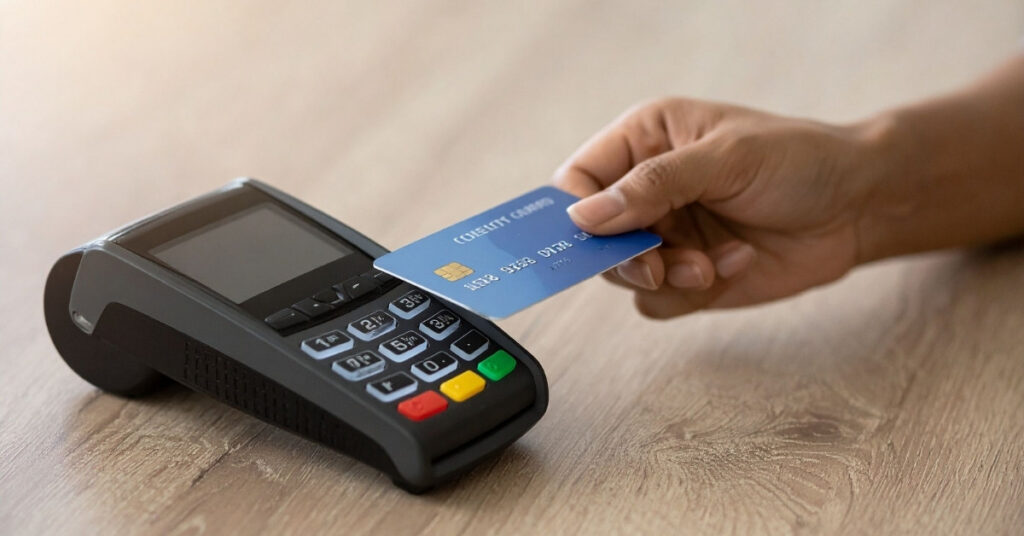
Typical Cost Categories (Ballpark Only)
Let’s talk about the costs involved. Every country’s consulate charges different fees, and immigration costs vary depending on your visa type. Here are the categories you should budget for:
Police report: Often free or very low cost in Indonesia. Some stations might request a small administrative fee.
Passport photos: You’ll need these for your embassy. Budget for a set of photos, maybe 50,000 to 100,000 IDR.
Document printing and photocopies: You’ll make lots of copies. Budget another 50,000 to 100,000 IDR.
Consular fees: This is the big one. Emergency passports or temporary travel documents vary by country. For example, if you need an Australian passport replacement, Australian passport services charge fees that can range from a couple of hundred to several hundred Australian dollars, depending on the document type and urgency. American emergency passports have their own fee structure. Check your consulate’s website for current fees.
Full replacement passport fees: If you’re getting a full new passport instead of an emergency document, expect standard passport fees from your country. These can range from $100 to $300+ USD equivalent, depending on your nationality.
Immigration fees: Exit permits and visa transfers come with costs. These vary widely. A simple exit permit might be relatively affordable, while transferring a KITAS to a new passport could cost several million Indonesian Rupiah.
Transport and translation: If you don’t speak Indonesian or Bahasa, you might need help. Taxis or drivers between the police, the embassy, the immigration, and your accommodation add up. Translation or fixer services can cost extra.
Airline change fees: If you miss your flight or need to rebook, expect fees unless your ticket is flexible or you have good travel insurance.
결론: Budget at least $500 to $1,000 USD equivalent for the whole process if you’re a tourist. Expats with KITAS or KITAP should budget more, possibly $1,500 to $3,000+, depending on complexity and professional help.
Typical Timelines (Examples, Not Guarantees)
Police report: Same day, usually one to three hours, depending on how busy the station is.
Emergency passport or travel document: Often within a few working days. If your identity is readily confirmed, your paperwork is complete, and your consulate is efficient, some people get emergency documents in two to three working days. Others wait longer if there’s a backlog or missing documents. Processing times can extend up to seven days in busy periods.
Full replacement passport: Often one to two weeks or longer. If your consulate prints passports locally in Bali or Jakarta, it might be faster. If they need to mail it from your home country, add international shipping time.
Immigration processing for exit permit or visa transfer: This varies a lot by office and time of year. During peak tourist season, expect longer waits. Plan for at least a few working days. Some people get exit permits the same day. Others wait a week or more if there are complications.
Total time from lost passport to leaving Indonesia: If everything goes smoothly and you’re a tourist just trying to get home, you might sort everything in five to seven days. If there are delays, public holidays, missing documents, or you have a complex visa, plan for two to three weeks.
Trusted Resources & Professional Help in Bali
Official Authorities & Contacts
Police: Find your nearest Polsek (local sector police station) or Polres (district police station) for loss or theft reports. Your hotel can help you locate the closest one.
Immigration offices: Indonesian immigration offices in Bali handle exit permits and visa transfers. The main immigration office for Bali is in Denpasar, but there are also immigration counters at Ngurah Rai Airport.
Embassies and consulates: Always visit official government websites for current information:
- Australian Consulate-General Bali: Check their official website for lost passport procedures, appointment booking, and consular fees. If you’re an Australian citizen needing passport replacement, the consular department in Bali can help with emergency documents and full passport applications.
- U.S. Consular Agency Bali: U.S. citizens can find emergency passport information on the U.S. Embassy Jakarta website, which covers passport services in Bali.
- Canadian, British, and other nationals: Check your country’s embassy website (usually based in Jakarta) for instructions specific to Bali. Different countries have specific requirements for passport replacement.
Don’t rely on old blog posts or Facebook comments for embassy hours or procedures. Policies change. Always verify current details on official government websites.
Expat, Digital Nomad & Traveller Communities
Bali has active expat and digital nomad communities on Facebook, WhatsApp, and Telegram. These groups share real-time experiences about consulates, immigration offices, and what’s working right now.
Groups like “Bali Expats,” “Digital Nomads Bali,” and “Bali Travel Advice” can be helpful for crowdsourcing recent experiences or finding translator recommendations.
How to use community advice wisely:
- Treat it as helpful context, not gospel truth
- Verify anything important with official sources
- Remember that everyone’s situation is different; what worked for someone else might not apply to you
- Be cautious about visa agents recommended solely through Facebook comments
FAQs – Quick Answers to Common Lost-Passport Questions
Can I leave Indonesia with just a police report and a passport photocopy?
No. You need a valid passport or an emergency travel document from your embassy, plus an exit permit or clearance from Indonesian immigration. A police report and photocopy prove you filed a report about your lost passport, but they don’t replace it.
Do I need to travel to Jakarta, or can everything be handled from Bali?
Most nationalities can handle everything in Bali. Many consulates have representation in Bali or can coordinate through their Jakarta embassy. Check your specific document requirements and the consulate’s procedures; some documents might need to be processed in Jakarta, but you usually don’t need to travel there yourself.
Can I visit other countries (not just my home country) on an emergency passport?
Usually, no, or only very limited destinations. Emergency passports and temporary travel documents are designed to get you home. Many countries won’t accept them for entry. Some emergency documents explicitly state “valid for direct return to home country only.” Always check the restrictions on your emergency document and confirm with airlines and destination countries before booking.
What happens if I find my old passport after a new one is issued?
Your old passport is officially canceled the moment your new one is issued. You can’t use it for travel anymore. If you find it, you should return it to your embassy or destroy it. Some people keep it as a souvenir with “CANCELED” stamped on it, but it has no legal validity.
Will losing my passport affect future visas or travel to Indonesia?
Losing a passport once generally doesn’t affect future visas or travel, as long as you handled everything legally and didn’t overstay. The loss report and your new passport create a paper trail, but there’s no “black mark” on your record for losing a passport. However, if you repeatedly lose passports or if the loss was connected to illegal activity, that could cause issues.
What if my visa expires while I’m waiting for an emergency passport?
Visit the Indonesian immigration immediately and explain your situation. Bring proof of your embassy appointment, your police report, and any correspondence showing you’re actively trying to leave. Immigration can often extend your visa or make notes in their system to protect you from overstay penalties. Don’t wait until after your visa expires; be proactive.
Does travel insurance usually cover some of these costs?
It depends on your policy. Many comprehensive travel insurance policies cover lost passport costs, including emergency document fees, accommodation extensions while you wait, and rebooking fees. But you need proof: keep all receipts, police reports, embassy receipts, and documentation of your timeline. Check your policy’s specific requirements and claim process before assuming anything is covered.





 English
  Bahasa Indonesia
  Español
  Italiano
  Français
  日本語
日本語  Nederlands
  繁體中文
繁體中文  한국어
한국어  Norsk bokmål
  Svenska
  Dansk
Dansk  Türkçe
  Polski
  香港中文
香港中文  简体中文
简体中文  Українська
  Русский
  Bahasa Melayu